BETRAYAL OF THE SECTOR: The gravy train has found a brand-new track.
How a CCIFSA official hijacked the National Dialogue to respond to journalism
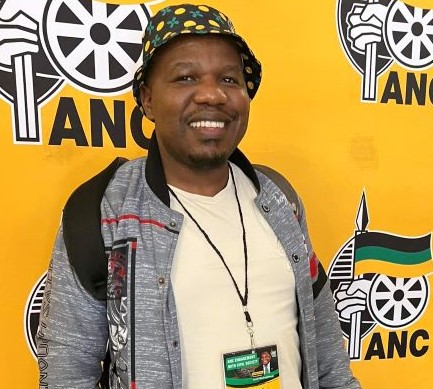
"We do not condone corruption," claims the National Dialogue Steering Committee. Yet, they have allowed CCIFSA’s Luzuko Khohli, currently under fire for his role in the R51.8 million arts sector looting scandal.
Just when you thought the absolute mockery of public accountability in South Africa’s arts sector couldn't get any worse, the gravy train has found a brand-new track.
On 3 June 2026, the National Dialogue Steering Committee for Arts, Culture and Creative Industries released a briefing note defending Luzuko Khohli over the Gobodo Forensic Report.
The brief note outlines an ambitious, taxpayer-funded plan to hold 195 pilot dialogues across the country to "renew the social compact" and tackle "systemic challenges"
While the Gobodo Forensic Report has already been handed over to the Hawks and the SIU to investigate R51.8 million in missing public funds, Luzuko Khohli has not stepped down. Instead, he has successfully inserted himself into a high-profile national body tasked with shaping the next 30 years of South African policy.
Khohli, the CCIFSA National Coordinator exposed by forensic investigators for presiding over a decade of financial rot is one of four signatories to the briefing note.
He is also the subject of the position statement embedded within it.
What the position statement says
The position statement opens with a declaration of principle:
“As representatives of the Arts, Culture and Creative Industries on the Steering Committee, we do not condone corruption or the maladministration of public funds.”
It then reads:
“At present, no verified findings have been made public that link Mr Luzuko Khohli to the alleged misuse of R51.8 million in public funds. In the absence of an officially released report and confirmed findings, we cannot adopt a formal view on the matter beyond noting our distance from the allegations until further information becomes available.”
In a clear defence of Khohli, the statement mounts a defence by invoking due process and the presumption of innocence, arguing that the Gobodo forensic report remains hidden from public scrutiny and that its findings cannot be verified.
It further urges the sector to refrain from making premature judgments in the absence of tangible evidence,
"Because the report has not been released publicly, it is not yet possible to confirm its contents or determine who, if anyone, is implicated. Any action must therefore be guided by due process, the publication of verified information, and the principle that individuals are presumed innocent until proven guilty,"the statement reads.
What the position statement does not say
At no point does the position statement identify which publication or article it is responding to. At no point does it engage with the specific findings cited in the reporting. And at no point does it address the central issue, that Khohli made a public statement claiming the Gobodo forensic report found nothing on the current CCIFSA administration, a claim that is contradicted by the report’s own findings across multiple financial years.
The statement also does not disclose that Khohli himself previously wrote to The Public Dispatch requesting a copy of the forensic report, and confirmed in that correspondence that he had not read the report and did not know its contents.
This means the position statement’s complaint, that the report has not been “released publicly” is being made by the same individual who has already admitted he made definitive public claims about the report without having read it.
An allegation nobody made
The position statement says that no findings link Khohli personally to the misuse of R51.8 million. This is correct. It is also irrelevant. Nobody made that allegation.
The Public Dispatch’s reporting examined a specific public claim made by Khohli on social media, that the Gobodo forensic report found nothing in the current administration.”
The article fact-checked Khohli's claim against the the forensic report and concluded that it was false.
The position statement missed the central issue. The article never accused Khohli of stealing R51.8 million or personally benefiting from the alleged irregularities. Its core allegation was that he misrepresented what the Gobodo forensic report says.
The article laid the evidence side by side, scrutinising the report paragraph by paragraph and financial year by financial year, and showing that his public claims could not be reconciled with the report's findings.
By reframing the issue as an allegation of personal theft, the position statement constructs a charge that was never made in order to deny it.
The argument is simple. Khohli said the report exonerates the current administration. But the Gobodo report directly implicated them.
The position statement does not address any of these findings. It does not dispute them. It does not explain them. It pretends they do not exist. All of them relate to the current administration’s period in office.
Presumption of innocence: A principle misapplied
The position statement invokes the principle that individuals are presumed innocent until proven guilty.
This is a foundational principle of criminal law. It applies in courts, in disciplinary proceedings, and in any process where an individual faces sanction.
It does not apply to journalism. A journalist is not a court. A fact-check is not a prosecution. When a public official makes a public claim about a public document, and a journalist examines whether that claim is supported by the evidence, no one’s presumption of innocence is engaged.
What is engaged is the public’s right to accurate information, a right that Khohli’s original social media post undermined and that the position statement continues to undermine.
If the presumption of innocence protects Khohli from being fact-checked, it protects every public figure from scrutiny. That is not what the principle means and that is not how it works.
But who authorised this?
The most significant issue is not what the position statement says. It is where it appears.
The National Dialogue of South Africa is a government-initiated process described in its own documentation as seeking to “renew the social compact, review the first 30 years of democracy, and produce a People’s Plan of Action for the next three decades.”
The Steering Committee is responsible for guiding that process. Its briefing notes are official documents circulated to sector leaders to inform democratic participation.
A position statement defending a named individual against journalism does not belong in a National Dialogue briefing note. It is not a policy matter. It is not a sector priority. It is not a governance question relevant to the pilot dialogues or the ward-level community engagement the rest of the document describes.
It is one steering committee member using an official platform to manage personal reputational damage arising from his own public statements about a forensic investigation into the organisation he represents.
The briefing note is signed by four steering committee members: Romeo Qetsimani, Loungo “Fruity” Masire, Mammatli Thakuli-Nzuza, and Luzuko Khohli. All four are now signatories to a document that defends Khohli.
The question is whether the other three steering committee members drafted, reviewed, and approved the position statement or whether Khohli inserted it into a document they were co-signing for a different purpose. If they approved it, they have made a collective decision to use the National Dialogue to defend a CCIFSA official against fact-checked reporting.
If they did not approve it, Khohli has co-opted their names and the authority of the steering committee without their informed consent. Either answer is a governance problem.
The pattern: From CCIFSA to the National Dialogue
This is not the first time that an individual associated with CCIFSA’s current leadership has responded to accountability journalism by reaching for institutional platforms rather than engaging with the substance.
In April 2026, CCIFSA President Joy Mbewana sent a letter of demand to The Public Dispatch on CCIFSA letterhead, threatening defamation proceedings, Press Council complaints, and legal action, in response to an article that named no individual and was sourced from the Minister’s own parliamentary reply.
The demand letter was written on the CCIFSA letterhead, an entity that has been deregistered.
In May 2026, Mbewana filed a PAIA request for the Gobodo forensic report, weeks before she sent the letter of demand confirming that she knew the investigation had produced findings while simultaneously attempting to suppress the journalism examining those very issues.
Now, in June 2026, Khohli has embedded a personal defence in a National Dialogue briefing note, a government document circulated to the entire arts, culture and creative industries sector.
The pattern is consistent: use institutional letterhead, invoke legal threats or official processes, reframe accountability journalism as persecution, and avoid engaging with the substance at all costs. At no point has any member of CCIFSA’s current leadership answered the questions the Gobodo report raises about their tenure. Instead, they have written demand letters, filed PAIA requests, made false public claims, and now co-opted a national democratic process to defend themselves.
The sector deserves better
The National Dialogue briefing note itself acknowledges that the creative sector faces corruption and governance failures. On the very same page as the position statement, the document states:
“In 2026, the sector continues to face corruption and governance failures involving department officials, arts administrators, federations and unions that claim to represent artists’ interests.”
That sentence describes CCIFSA precisely. A federation that claimed to represent artists’ interests. A federation whose governance failures have now been documented across 187 pages by forensic investigators. A federation whose R51.8 million in public funding cannot be properly accounted for.
The artists and creatives who are being asked to participate in the National Dialogue deserve to know that the same platform is also being used to shield a CCIFSA official from scrutiny.
They deserve to know that the man telling them “the findings all relate to 2015–2018” has admitted in writing that he has not read the report.
They deserve to know that the position statement defending him does not address a single finding from the forensic investigation.
And they deserve to know that the National Dialogue’s own briefing note describes the very problem that its signatories are now part of.
The creative sector has been asked to trust this process. That trust cannot survive if the process is being used as a PR vehicle for individuals under scrutiny.