BREAKING: Minister McKenzie dissolves the NAC Board with immediate effect.
In a dramatic move on 25 May 2026, Minister Gayton McKenzie dissolved the entire National Arts Council Council with immediate effect.
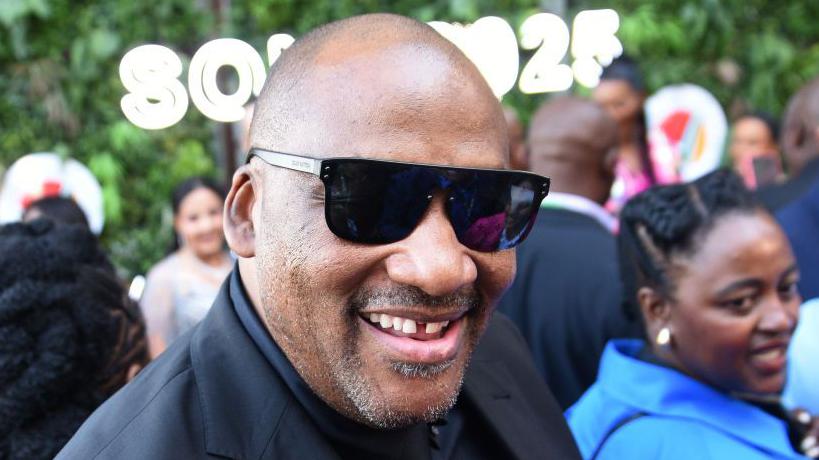
Game over: Minister Gayton McKenzie officially dissolves the National Arts Council Council, slamming their financial stewardship and protection of insiders
McKenzie's hammer fall
Minister of Sport, Arts and Culture Gayton McKenzie has dissolved the entire council of the National Arts Council of South Africa with immediate effect.
The dissolution letter, signed by McKenzie and dated 25 May 2026, invokes Section 5(5) of the National Arts Council Act 56 of 1997, as amended by the Cultural Laws Amendment Act of 2001, which empowers the Minister to dissolve the council on any reasonable grounds.
Every single member of the NAC council including Chairperson Eugene Botha ceases to hold office as of today.
Who the NAC is and why this matters
The NAC is the country's primary arts funding body. It is a Schedule 3A public entity established under the NAC Act and funded through the Department of Sport, Arts and Culture. Its mandate is to support and develop the arts across South Africa, distributing grants to individual artists, arts organisations, and cultural practitioners in every province.
It receives hundreds of millions of rands in public money every year. And for the past several months, it has been in a state of accelerating governance crisis, one that The Public Dispatch has been investigating and reporting on in detail.
What The Public Dispatch has been reporting
This publication has spent weeks investigating the NAC and here is what we reported.
The iPhone 17 Scandal.The Public Dispatch revealed that the NAC procured approximately 18 Apple iPhone 17 devices for its provincial council members, part-time governance appointees who are not employees, not field workers, and not emergency responders.
The iPhone 17 retails in South Africa at between R20,799 and R52,499 per unit. At the top end, 18 devices would cost taxpayers R944,982, close to one million rand.
The NAC never formally confirmed or denied the procurement. It never provided SCM records, a board resolution, or an asset register to justify the expenditure.
The Double-Payment Recruitment Scandal.
The Public Dispatch also reported that the NAC had hired an external recruitment firm to manage the appointment of its permanent CEO and CFO, despite maintaining a fully functioning in-house HR department.
Botha confirmed the appointment of the external firm in writing to this publication, describing it as necessary due to "capacity constraints" within the HR department.
With both the CEO and CFO earning above R1 million per annum, the total placement fees for both appointments could approach R1 million, paid on top of the salaries of the HR staff who already exist to do this work.
The Bonus Dispute and Zero Pay
The Public Dispatch reported that NAC employees had been engaged in a protected strike over performance bonuses that were never paid for the financial years 2019/20, 2020/21, and 2021/22.
This publication obtained and published a ministerial letter dated 22 April 2026, in which McKenzie confirmed that the NAC had already spent more on legal costs fighting its own employees than the value of the bonuses owed. McKenzie demanded urgent settlement. The board scheduled a meeting for 29 May — 37 days after his urgent instruction.
That meeting will now never take place. The board no longer exists.
The Broader Governance Crisis.
The Public Dispatch has also reported on the former NAC's acting CEO Julie Diphofa and acting CFO Reshma Bhoola, the two most senior figures in the organisation whose permanent appointments have been the subject of serious governance questions.
Bhoola was previously found to have moved R65 million from the NAC's ABSA account to the Corporation for Public Deposits without the CEO's authority or knowledge. That matter is now in the hands of the Public Protector. Diphofa appointed a colleague to a position in 2025 without advertising it or following any HR processes. More than 300 artists and employees signed a petition calling for accountability. The board dismissed it without investigation.
What the dissolution letter says
McKenzie opens by referencing his 22 April 2026 letter,
He notes that no settlement has been concluded. He notes that the council failed to notify his office of any resolution as required.
And he names the 29 May council meeting date, still four days away as inadequate.
"I do not consider this timeline consistent with the urgency required," he wrote.
"I have also received credible information raising concerns regarding certain procurement decisions by the NAC, including external recruitment fees and expenditure on mobile devices for Council members, which appear difficult to reconcile with the institution's stated financial constraints. These matters deepen my concerns about the quality of financial stewardship exercised by the current Council," he continued.
He then delivered the verdict in plain language:
"Having carefully considered all the above, I have formed the view that it is not in the public interest for the current Council to continue in office. The ongoing failure to resolve this dispute is symptomatic of a broader breakdown in institutional leadership and governance. The NAC exists to serve the arts sector and the people of South Africa. It cannot effectively fulfil its statutory mandate in these circumstances."
He said it would happen. It happened.
Approximately one week ago, McKenzie stood at a media briefing and said:
"When I saw that the NAC problem is persisting I stepped in. The Union asked to see me and I spoke to the Chairman of the Board. I gave him one instruction, that people should go back to work and that people should be paid their bonuses. I'm waiting for that to happen, for the bonuses to be paid. But I can tell you now that if my instruction is not being adhered to, there will be a new Board. It's as simple as that. My instruction is very clear, that people must be allowed to go back to work and must be paid their bonuses and we move on."
The instruction was not adhered to and now there's no Board.
What happens now
The dissolution letter sets out five immediate consequences.
- All council members cease to hold office with immediate effect.
- The Director-General of DSAC, or her delegate, will determine the functions of the accounting authority pending a new council appointment.
- The acting CEO and acting CFO will continue managing day-to-day operations and will now report directly to the Department rather than to a board.
- Management must submit a comprehensive financial and operational status report to the Department within five working days, including a full account of all legal costs incurred in the bonus dispute and all other significant expenditures in the current financial year.
- And the Minister's office will initiate the appointment of a new council or an interim administrator as a matter of priority.
That last point carries significant implications for the permanent CEO and CFO recruitment process. There is no board to oversee any appointment process. Whatever was happening with the external recruitment firm is now in limbo. The Minister who just dissolved the board for, among other things, paying that external firm will be watching what happens next.
The legal authority behind the dissolution
Section 5(5) of the National Arts Council Act 56 of 1997, as amended by Section 22(b) of the Cultural Laws Amendment Act of 2001, empowers the Minister to dissolve the council on any reasonable grounds.
This is not an emergency power. It is not a dramatic or unusual provision. It exists precisely for situations like this one where an accounting authority has demonstrated, over a sustained period, that it cannot or will not exercise the governance responsibilities the law places on it.
McKenzie has used it. And he has used it on grounds that are clearly documented, publicly stated, and rooted directly in the failures this publication has been reporting on for weeks.
What The Public Dispatch will be watching
This is not the end of this story. It is the end of a chapter.
The new council or interim administrator must be appointed transparently and without undue delay. The permanent CEO and CFO recruitment process must be restarted under proper governance with a new, independent board overseeing it, not acting executives reporting to the department that is now effectively their employer.
The bonus dispute must be resolved and employees paid. The five-working-day financial report must be made public. The procurement questions about the iPhones, the external recruiter must be answered.
The Public Dispatch will be reporting on all of it.