CCIFSA's R51.8 million heist exposed. Artists robbed blind while fat cats feasted
McKenzie receives Gobodo forensic report confirming extensive financial irregularities, governance failures, and PFMA breaches.
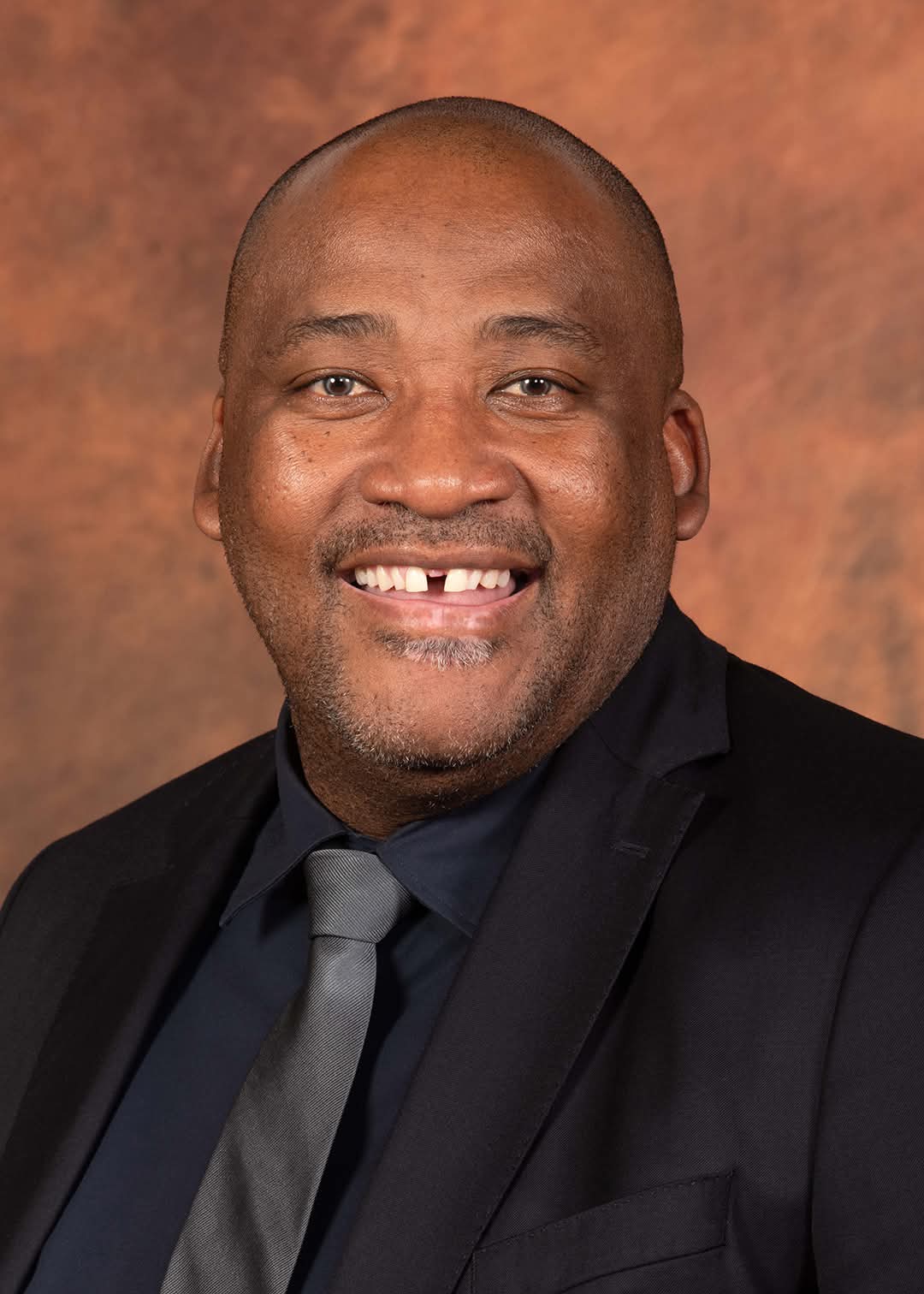
The Hammer has fallen. Minister Gayton McKenzie drops forensic bombshell on CCIFSA. R51.8 million unaccounted for. No more lies. No more theatre. Justice incoming
The hammer falls
For years, the Cultural and Creative Industries Federation of South Africa (CCIFSA) told anyone who would listen that the accusations against it were a political vendetta. A smear campaign. A personal grudge.
That narrative died on Wednesday night.
The Minister of Sport, Arts and Culture, Gayton McKenzie issued a media statement confirming what this publication and a handful of relentless portfolio committee members had been saying for years, CCIFSA cannot account for the public money it received.
The final forensic investigation report, conducted by Gobodo Forensic and Investigative Accounting on behalf of the DSAC examined R51.8 million in public funds transferred to CCIFSA between the 2014/15 and 2023/24 financial years.
Its findings are damning.
The report has identified extensive financial irregularities, governance failures, and breaches of the Public Finance Management Act and the Department's own policies.
Let that number settle: R51.8 million. Not the R12 million CCIFSA's leadership once admitted to receiving and insisted was used for the benefit of artists.
Not the R2.5 million Joy Mbewana told Parliament in 2021 was the only amount CCIFSA had been given. R51.8 million.
A decade of public money poured into an organisation that, as this publication has consistently reported, was structurally incapable of accounting for it.
What the report found: A catalogue of financial failure
According to the DSAC media statement, the key findings include the following:
An irregular contract addendum was signed in March 2016, increasing the original CCIFSA funding agreement by R772,884 with no submission, no justification, and no proper approval.
In other words, nearly three-quarters of a million rand was tacked onto a government contract without anyone authorising it through the proper channels.
R5.4 million in unspent funds at the end of the 2016/17 contract period was not returned to the Department as required. Instead, these funds were used by CCIFSA to bankroll its own operations during years in which it had no valid contract with DSAC.
A close-out report submitted to the Department contained financial information that misrepresented funds intended for the Downtown Music Hub as CCIFSA's own operational funding.
This is not a bookkeeping error. It is the deliberate misrepresentation of the purpose of public funds in an official report to a government department.
The Downtown Music Hub: R13 million in a single bank account.
According to the DSAC statement, CCIFSA's appointment as fiduciary agent followed a flawed procurement process.
Worse, the R13 million in DTMH funds was commingled with CCIFSA's own funds in a single bank account. The report finds this was not in the best interest of the Downtown Music Hub and resulted in maladministration.
The implications are stark. When an organisation pools ring-fenced programme funds with its own operational money in a single account, it becomes impossible to trace what went where.
That is either incompetence of the highest order or a deliberate governance design intended to obscure the movement of money.
Either way, R13 million in public funds earmarked for music industry development was handled in a manner the forensic investigators describe as maladministration.
The USIBA Awards: R10 million with no invoices.
Perhaps the most explosive finding concerns the Ushering In a New Era awards commonly known as USIBA, the Ministerial Conference and Awards that were supposed to celebrate and uplift the creative sector.
The DSAC statement confirms that the R10 million first tranche paid to CCIFSA for USIBA cannot be properly accounted for.
No supporting invoices. No proof of payments. The bulk of these funds were irregularly subcontracted to a third party in breach of the funding agreement.
As far back as late 2024, EFF member, and member of Parliament Eugene Mthethwa had told the committee that the R12 million was for the Usiba Awards and that CCIFSA had not properly accounted for it. He was dismissed. He was accused of playing politics. CCIFSA's leadership claimed he was out to destroy the organisation.
The forensic report says he was right. The salary racket: 32% administration fees
As if the missing millions and misrepresented finances were not enough, the Gobodo report also uncovered a funding application in which CCIFSA claimed administration costs of 32% of the total allocation, more than three times the 10% maximum permitted under the applicable agreement.
Those administration costs consist of salaries and payments to CCIFSA executives. In plain language: CCIFSA was applying for public money and planning to pay its own leadership more than three times the allowed overhead, while artists on the ground were getting nothing.
This finding alone should end any remaining debate about whose interests CCIFSA's leadership was serving. It was not the artists.
The Minister responds: 'This is not victimisation'
McKenzie's response, delivered through the official media statement, is pointed and leaves no room for the victim narrative that CCIFSA's leadership has been constructing for over a year.
"This report puts that narrative to rest. What this investigation has documented is not victimisation. It is mismanagement of public money, failure to account, failure to return unspent funds, and the misrepresentation of financial records."
"The South African public, and the artists and creatives this federation was meant to serve, deserve honesty about what happened to these funds. They will not be served by a public theatre of grievance designed to obscure the findings of an independent forensic investigation," he said
The phrase "public theatre of grievance" is not accidental. Over the past year, CCIFSA's leadership and individuals associated with it have mounted a sustained campaign to frame any scrutiny of the organisation as political persecution.
They have written to editors. They have threatened journalists. They have demanded apologies and retractions. All while R51.8 million in public money sat unaccounted for.
"The cultural and creative industries are too important, and the public funds entrusted to this Department too scarce, for us to allow R51 million in transfers to escape proper scrutiny," McKenzie added.
"Where officials in my Department are found to have failed in their duties after due process, they will face consequences. Where funds were used irregularly, that will be declared and addressed. And where the law has been broken, that will be a matter for the appropriate authorities."
Consequence management: Hawks, SIU, and the Auditor-General
The DSAC statement confirms a series of actions that signal this is not being treated as a bureaucratic housekeeping exercise.
The Director-General has been instructed to commence appropriate processes against departmental officials identified in the report.
Those officials will be afforded the opportunity to make representations before any disciplinary action is taken. The Department will declare the irregular expenditure identified in the report in accordance with the PFMA.
Most significantly, the report has been referred to the Auditor-General of South Africa, the Special Investigating Unit, and the Hawks for any further investigation they may deem appropriate.
The referral to the Hawks is particularly notable. This is not a departmental internal inquiry being handled quietly. This is a forensic report being placed before South Africa's premier anti-corruption investigation units.
When the Hawks receive a referral of this nature, it is because the conduct documented in the report may cross the line from maladministration into criminality.
What
happens next The full report is classified as a confidential internal departmental document.
The Department has committed to declaring irregular expenditure, pursuing consequence management against implicated officials, and referring the matter to the Hawks and the SIU.
For the artists and creatives who were supposed to be the beneficiaries of R51.8 million in public investment, the question is whether this time, unlike every time before, the consequences will actually materialise.
South Africa's creative sector has seen forensic reports before. It has seen parliamentary outrage before. What it has rarely seen is anyone going to prison for stealing money that was meant for artists.
McKenzie has said the right things. The referral to the Hawks suggests intent. But intent without follow-through is just another press statement. The Public Dispatch will continue to report on this matter as it develops. We will report on the Hawks investigation. We will report on the SIU process.
We will report on the departmental consequence management. And we will report on the forensic report itself when it enters the public domain.