From authority to chaos: How Dr Cynthia Khumalo’s decision threw School sport into crisis
While Dr Khumalo sits in the comfort of the DSAC offices, thousands of young athletes are left with empty suitcases and broken dreams. This is not just a logistical oversight but a gross betrayal of the Public Finance Management Act and a masterclass in how to dismantle the future of school sports through incompetence.
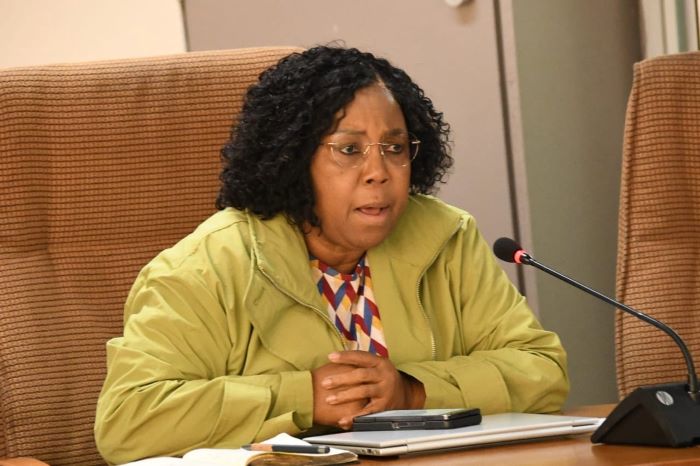
With a single stroke of a pen, Director-General Dr. Cynthia Khumalo has turned a national milestone into a monument of institutional failure.
The Department of Sport, Arts and Culture (DSAC) has plunged school athletics into a state of absolute anarchy.
New documents obtained by The Public Dispatch reveal a staggering level of contradiction, lack of consultation, and what appears to be a deliberate attempt to sabotage the 2026 National High/LSEN Schools Athletics Championship.
Despite the desperate, last-minute heroics of South Africa Schools Athletics (SASA) to save the event, the DSAC’s refusal to provide a formal directive has effectively killed the dreams of thousands of young athletes.
The Background: A failure foreseen
The confusion sowed by the DSAC is nothing short of professional malpractice.
On April 2, 2026, Director-General Dr. Cynthia Khumalo issued a directive unilaterally postponing the championships scheduled for April 8–11 at the Royal Bafokeng Stadium in Rustenburg. Her justification was a vague reference to the unavailability of the venue.
The reaction from Parliament was immediate and scathing. Joe McGluwa, Chairperson of the Portfolio Committee on Sport, Arts and Culture, did not hold back, labelling the postponement unacceptable and a breach of trust.
He pointed out that the unavailability was foreseeable and avoidable, and that the department’s failure to perform due diligence had forced provinces into a position of massive financial loss.
“This postponement is unacceptable… It reflects a failure of basic planning and due diligence. The unavailability of the stadium was foreseeable and avoidable… This failure is not about logistics it is about respect for our youth, our educators, and our communities...Provinces have already incurred significant costs for accommodation, transport, and contractual obligations, costs that now translate into financial losses and reputational damage,” McGluwa had said.
DSAC ignored him. This morning (Monday, 06 April) as teams were due to start departing, SASA’s two devastating documents prove the department has now ghosted an entire national championship.
The DSAC’s silent sabotage exposed
While Khumalo’s office was busy regretting the inconvenience, South Africa Schools Athletics (SASA) was desperately trying to save the event. Documents obtained by The Public Dispatch reveal that the DSAC’s unavailability excuse may have been a smokescreen for a much more embarrassing failure.
In a public statement issued on April 5, 2026, SASA revealed that during site inspections of the Royal Bafokeng Stadium it was noted that the installation of the stadium sound system remained incomplete, posing a potential operational risk.
Instead of fixing a speaker system or hiring a mobile solution, Khumalo chose to scrap the entire national event. The letter suggests that she took this decision without even talking to the people running the show.
"Following the circulation of a letter from DSAC signed by the Director-General, Dr C. Khumalo, without proper consultation with the two main stakeholders, DBE and SASA... Consultative meetings were convened," wrote Schalk.
A heroic effort met with silence
Refusing to accept the DSAC’s surrender, SASA performed a miracle. In less than 48 hours, they secured Pilditch Stadium in Pretoria, a World Athletics certified venue and organized a full Local Organizing Committee.
On April 4, SASA wrote to DSAC Director Ms. Mamoruti Monama, pleading for the department to simply withdraw the postponement letter and allow the games to proceed in Pretoria:
The letter reads in part:
“Following a multi-stakeholder meeting held at Rustenburg Kloof on 24 March 2026… Assurance was given that all compliance requirements were possible to be met… A virtual meeting was then held on 01 April 2026… At the conclusion of this meeting, the Chairperson of the Project Management Team (PMT) informed the present stakeholders that a concurrent meeting had taken place, and feedback from the Premier’s Office confirmed that the venue was regrettably no longer available."
According to the letter, three proposals were tabled:
- Cancellation of the championships – not supported
- Postponement to January 2027 – not supported
- Securing an alternative venue (Pilditch Stadium) on the same dates – supported
"SASA subsequently volunteered and undertook to secure Pilditch Stadium in Pretoria… We are pleased to confirm that the venue has been successfully secured," the letter continued.
SASA had everything ready, electronic timing systems, wind gauges, results teams, and volunteers. All they needed was a formal directive and financial support from the DSAC to allow the provincial teams to move their logistics from Rustenburg to Pretoria.
Governance failure and the breach of law
This is a flagrant breach of the National School Sport Policy (2011), which mandates cooperative governance and integrated planning between DSAC and DBE.
Section 41(1)(h) of the Constitution requires all organs of state to cooperate with one another in mutual trust and good faith. DSAC shredded that constitutional duty by issuing a postponement without proper/adequate consultation and then ignoring SASA’s rescue plan even after the deadline.
The DSAC-DBE Memorandum of Understanding demands joint decision-making on national championships. The DSAC’s refusal to endorse the move to Pilditch is a direct violation of the Public Finance Management Act (PFMA). By issuing a postponement notice after provinces had already committed funds, the department created fruitless and wasteful expenditure.
Irrecoverable costs already incurred by Limpopo, Western Cape and parents now risk becoming irregular expenditure exposing officials to personal liability, forensic audits and possible criminal charges.
SASA’s letter was explicit about the financial carnage:
"It was also noted that Limpopo and Western Cape had already incurred expenses related to transport and accommodation in Rustenburg. To avoid wasteful expenditure and further financial implications for provinces and parents, it will be in the best interest of all stakeholders to continue with the championship as planned".
Furthermore, the National Sport and Recreation Act mandates the DSAC to support the development of sport. By effectively blocking a viable alternative venue, the department has engaged in what can only be described as administrative sabotage.
The human cost: stealing the future
The most heart breaking aspect of this saga is the impact on the athletes. For many, this championship is their only chance to escape poverty through talent. SASA’s statement underscores the high stakes:
"Our primary objective remains to prioritise the athletes... This championship is critical for athletes seeking bursaries from schools and tertiary institutions, both locally and internationally. It also presents opportunities for recognition and potential partnerships with international sports brands such as Adidas, Nike, and Puma,." SASA wrote.
By failing to sign a simple letter of approval by the April 5 deadline, the DSAC has ensured that the Western Cape team, scheduled to depart on April 6, stays home.
Implications for children:
- Bursaries, tertiary placements and sponsorships with Adidas, Nike and Puma disappear.
- Disadvantaged learners lose their only ladder out of poverty.
- Financial: Duplicated bookings, forfeited deposits and potential lawsuits.
- Reputational: School sport is reduced to a national embarrassment.
This follows the Portfolio Committee’s recommendation to dissolve the Athletics South Africa board, repeated WADA non-compliance scandals and the revocation of Africa’s only anti-doping lab. DSAC is not merely failing, it is actively sabotaging youth development and social cohesion.
DSAC’s silence speaks louder than any letter
SASA’s final public statement is a haunting indictment of the DSAC’s leadership:
"It is with deep regret that SASA acknowledges this as a profoundly disappointing moment for school athletics in South Africa... SASA therefore regrets to inform stakeholders that, due to the absence of a formal directive and financial support, some provinces have begun communicating that teams will not travel. As a result, SASA can't confirm that the championship will proceed as planned"
DSAC has proven that it is a department that knows the price of everything and the value of nothing. They noted the financial strain but did nothing to alleviate it. They regretted the inconvenience but refused to approve a solution that was handed to them on a silver platter. Under the leadership of Dr. Cynthia Khumalo, the DSAC has become a graveyard for the dreams of South African children.
NB: Evidence Locker is live: go read the unedited letters now. Share this article and the documents. The public deserves to see exactly how DSAC killed school sport.