King Hintsa's skull may never be recovered
DSAC concedes there is no record of where the amaXhosa king's head is held.
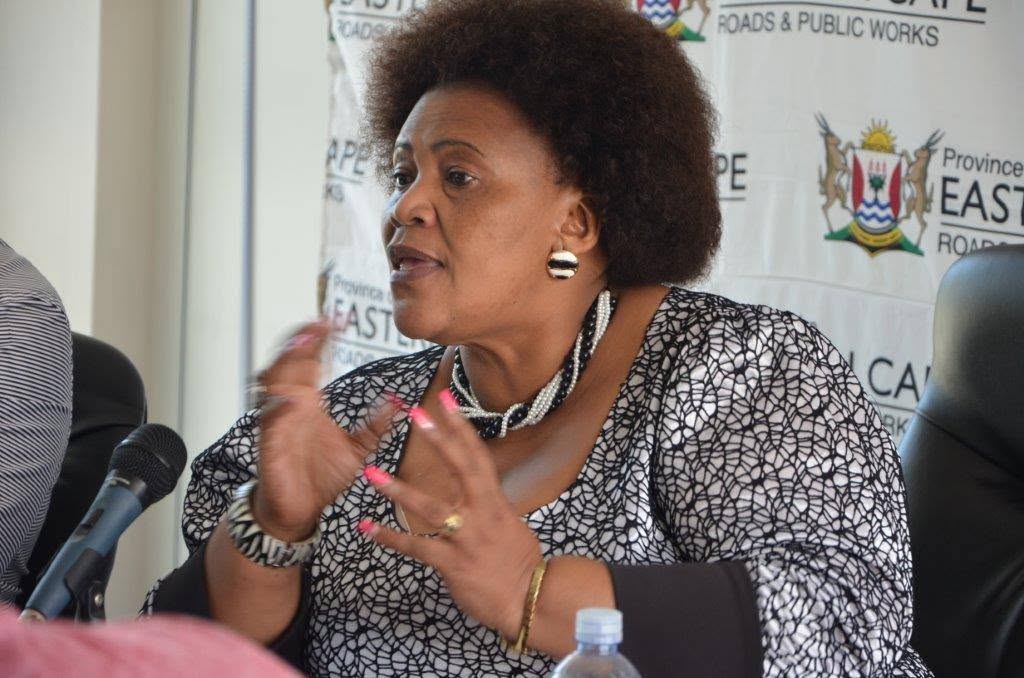
ATM MP Thandiswa Marawu, who asked the Minister of Sport, Arts and Culture what concrete steps had been taken to recover the remains of King Hintsa kaKhawuta. Photo: [PMG]
The Department of Sport, Arts and Culture (DSAC) has told Parliament that the recovery of the skull of King Hintsa kaKhawuta may not prove to be possible. DSAC said that it will not begin searching for it until the king's remaining bones have been exhumed from a riverbank grave in the Eastern Cape, a project that has been dormant since 2019.
The concession came in response to a parliamentary question from African Transformation Movement MP Thandiswa Marawu, who asked about progress made, concrete steps taken, and the plans and timelines in place to ensure the repatriation was concluded with dignity.
On the central question, the answer is that nobody knows where the King’s head is.
"Historical and oral accounts record that the body of King Hintsa was mutilated at the Nqabara River in May 1835 by members of the British force under Colonel Harry Smith, among them George Southey and William Southey. There is, however, no conclusive documentary or forensic record identifying the institution or collection in which the head of the King is presently held,” said the Minister of Sports Arts and Culture, Gayton Mckenzie
"The matter received wide public attention in 1996, when a skull brought to South Africa from Scotland by Mr Nicholas Gcaleka was presented as that of King Hintsa. The claim was disputed by the Xhosa Royal House and forensic examination determined that the remains were most probably those of a middle-aged European woman. No verified identification has been made since," he continued.
What follows is a sequencing decision that has drawn no attention, and a set of omissions that are harder to explain
The programme that has already commenced
The process commenced some time ago.
Cabinet approved the National Policy on the Repatriation and Restitution of Human Remains and Heritage Objects on 16 March 2021, a policy covering the remains of South Africans lying outside the country's borders, on the continent or overseas, as well as inside it.
In 2023, Cabinet approved a Country-to-Country Repatriation Model and Implementation Plan. The minister who signed the Hintsa reply, Gayton McKenzie, set out both of those instruments in a speech at an exile repatriation ceremony on 31 July 2026, seven weeks before this reply was signed. In that same speech he recorded that President Ramaphosa received the remains of 42 people who died in Zambia and Zimbabwe in September 2024.
In June 2025 the department announced the reburial of 58 Khoi and San ancestral remains originating from the Northern Cape, implemented through Iziko Museums and SAHRA's Repatriation and Restitution Office, and guided by a Northern Cape Reburial Task Team representing the Nama, Griqua, Korana and San communities.
The country-to-country programme is a running programme with a Cabinet-approved model, an implementation plan, named partner departments and a consultative task-team precedent for exactly the kind of community engagement the Hintsa matter requires. Yet, the reply treats it as something yet to begin.
SAHRA's role, understated
The reply mentions the South African Heritage Resources Agency once, as the body from which a permit will be needed under section 36 of the National Heritage Resources Act 25 of 1999 to disturb a grave older than 60 years. Engagement on that permit, it says, "will commence".
Under the 2021 policy, SAHRA is considerably more than a permit counter.
A Repatriation and Restitution Office has been established at SAHRA to coordinate the repatriation and restitution of human remains and heritage objects, and the policy contemplates SAHRA as the lead agency on policy implementation relating to the repatriation of human remains and the restitution of heritage objects.
The reply does not mention the Repatriation and Restitution Office. It does not say whether the Hintsa matter has been referred to it, placed on its case list, or budgeted for.
What the Act requires
The statutory position on the grave itself is not neutral ground.
Section 3(2)(g) of the National Heritage Resources Act places graves and burial grounds within the national estate, and names royal graves and the graves of traditional leaders as a category in their own right, alongside ancestral graves and the graves of victims of conflict. The Nqabara gravesite is, on the face of the statute, a national estate resource of the highest order.
Section 36(3) prohibits the disturbance, exhumation or removal of a grave older than 60 years situated outside a formal cemetery administered by a local authority without a permit from SAHRA or the relevant provincial heritage resources authority. It separately prohibits the disturbance of the grave of a victim of conflict. Whether the grave of a king killed by a British military force in 1835 engages that second limb as well as the first is a question SAHRA has apparently not been asked, because the department has not yet approached it.
Section 36 also bars bringing detection or excavation equipment onto such a grave without a permit. That matters, because the national department is not the only arm of the state that has been working on this.
In May 2024, the Eastern Cape department's director for museum and heritage services, Monwabisi Kobese, told a public dialogue in East London that the province was working with the Eastern Cape Provincial Heritage Resources Authority to survey the banks of the Nqabarha River using ground-penetrating radar, to trace the king's head and associated artefacts.
The national reply contains no reference to that survey, to its outcome, or to the provincial heritage authority. Section 41(1)(h) of the Constitution obliges organs of state to co-operate in mutual trust and good faith and to co-ordinate their actions, a duty given statutory form by the Intergovernmental Relations Framework Act 13 of 2005.
Section 36 further carries a conservation dimension. SAHRA has a general function to conserve and care for protected burial grounds and graves where that responsibility does not rest with another authority. The department's own reply records that the grave is subject to soil erosion and at risk of being swept away, which was the motivation for the exhumation request in the first place. That risk has been on the record since before 2019. Nothing in the reply indicates that any conservation measure, as opposed to an exhumation, has been considered in the interim.
Should the skull ever be located and returned, a further layer applies. The Act's definition of "archaeological" material captures human remains older than 100 years, bringing section 35 permitting into play, and the export and import of heritage objects is regulated under section 32. Exhumation and reburial also require authorisation under the Regulations Relating to the Management of Human Remains made under the National Health Act 61 of 2003, a step the reply does not mention at all.
Who must be consulted, and under which law
The reply says the department has written to His Majesty King Ahlangene Vulikhaya Sigcawu and is engaging his office to secure a date for a consultation. It refers throughout to "the Office of His Majesty" and "the amaXhosa Kingship".
King Ahlangene's certificate of recognition was signed by President Ramaphosa on 19 February 2021. The National Assembly adopted its resolution on King Hintsa's remains on 1 March 2022. Four and a half years after the resolution, and five and a half years after the recognition, the department's position is that it is trying to book a meeting.
The statutory framework governing that consultation is itself unstable. In Mogale and Others v Speaker of the National Assembly [2023] ZACC 14, the Constitutional Court declared the Traditional and Khoi-San Leadership Act 3 of 2019 invalid because Parliament had overwhelmingly failed to facilitate public participation, and gave Parliament 24 months to re-enact the legislation or pass a fresh law. That declaration of invalidity remains suspended, the Act remaining in force until 29 May 2027 following an extension granted by the Court. The Act supplies the machinery for kingship councils and for the recognition of the leadership the department now says it must consult.
There is also the question of who speaks for the kingship. The AmaTshawe royal clan, chaired by Nkosi Daliwonga Derrick Mgwebi, challenged King Ahlangene's recognition in court, contending that customary law processes had been disregarded. The National Assembly resolution, on the department's own account, additionally names the Rharhabe Kingdom and the Hleke Royal House as parties to discussions with the British Government. Engagement with both of those houses, the reply says, "will commence".
The obstacle on the British side, examined
The department frames the outcome as dependent on "negotiations with the institutions and authorities concerned in the United Kingdom". It is worth being precise about what the law there permits, because the usual assumption that British institutions cannot return remains is wrong for a death in 1835.
Section 47 of the Human Tissue Act 2004 gives nine national museums the power to de-accession human remains believed to be those of a person who died less than 1,000 years before the section came into force, a power those institutions previously lacked. The nine are the Armouries, the British Museum, the Imperial War Museum, the Museum of London, the National Maritime Museum, National Museums and Galleries on Merseyside, the Natural History Museum, the Science Museum and the Victoria and Albert Museum.
The British Museum's own human remains policy records that requests for the transfer of remains more than 1,000 years old fall outside section 47 and are governed instead by the British Museum Act 1963. Hintsa died 191 years ago. The statutory bar that blocks the return of antiquities does not apply to him.
Alongside the statute, the Department for Culture, Media and Sport's Guidance for the Care of Human Remains in Museums, issued in 2005, sets out recommended best practice and is not itself statutory, and provides the claims procedure through which a request would be assessed.
Two qualifications matter. Section 47 covers named national institutions; Scottish museums and university anatomical collections fall outside it and operate under separate arrangements, and much of the historical trail in the Hintsa matter, including the 1996 episode, points to Scotland. And there is no enforceable legal claim for a removal in 1835: the 1970 UNESCO Convention on illicit trafficking in cultural property, to which South Africa acceded in 2003, does not operate retrospectively.
The available routes are the UNESCO Intergovernmental Committee for Promoting the Return of Cultural Property to its Countries of Origin, which exists precisely for cases falling outside the 1970 Convention, and bilateral diplomacy under article 12 of the UN Declaration on the Rights of Indigenous Peoples, which commits states to enable repatriation of human remains through fair, transparent and effective mechanisms.
Neither route requires an exhumation in the Eastern Cape first. Neither has been used. Marawu had already put substantially the same question to the Minister of International Relations and Cooperation in October 2025, as question 5527 on the National Assembly internal question paper.
Returns of this kind do happen. Sarah Baartman was returned from France in 2002, Klaas and Trooi Pienaar from Austria in 2012, and the skull of the Sakalava king Toera was handed into Malagasy custody in August 2025 and received in Antananarivo in September.