NRF launches 41 research Chairs at historically disadvantaged Universities in landmark equity push
New Research Chairs at South African universities seek to boost innovation and technology, moving beyond elite institutions to fix research output.
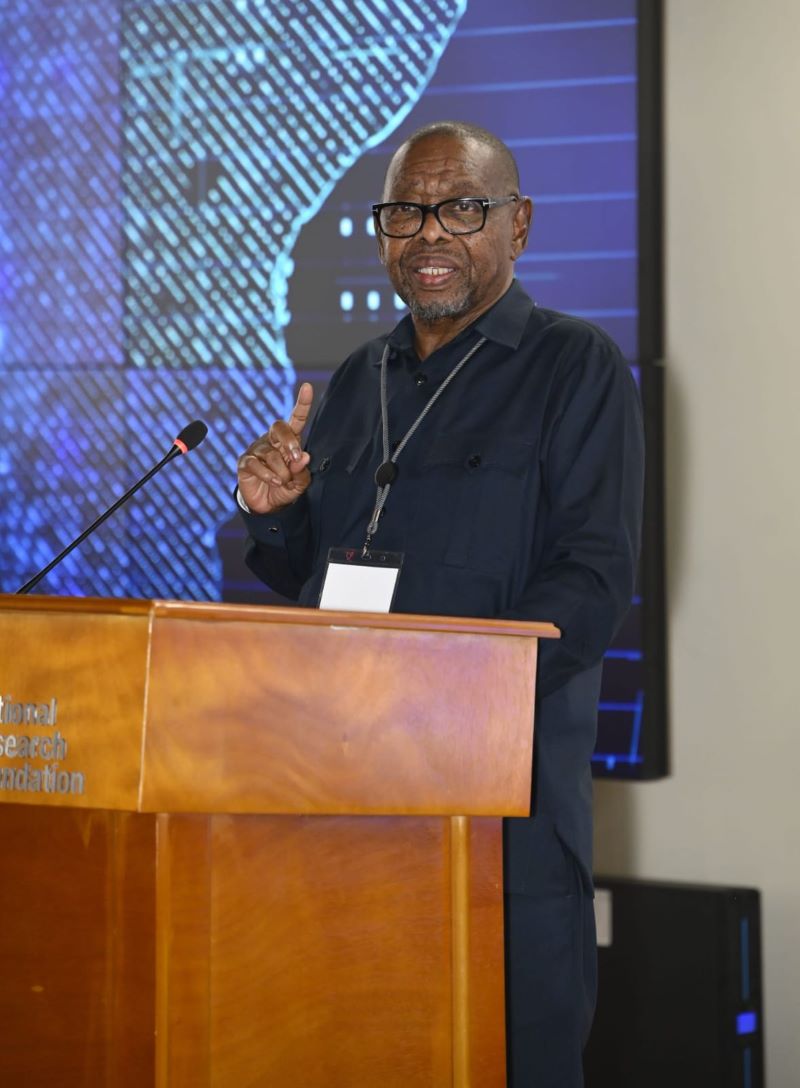
Minister Nzimande launches a historic 41 new research chairs.
A long overdue redistribution
The National Research Foundation (NRF) has launched 41 new Research Chairs at Historically Disadvantaged Institutions (HDIs), universities of technology (UoTs), and emerging universities. A significant expansion of a programme that, for two decades has largely benefited the country's traditionally well resourced universities.
The chairs were unveiled at a ceremony at the NRF Building in Pretoria on Thursday, 16 April 2026 and they form part of the South African Research Chairs Initiative (SARChI).
This is a flagship government programme established in 2006 by the Department of Science and Technology and the NRF, designed to attract and retain excellence in research and innovation at South African public universities through Research Chairs with a long-term investment trajectory of up to 15 years.
The 15 institutions receiving chairs include:
- Cape Peninsula University of Technology,
- Central University of Technology,
- Durban University of Technology,
- Nelson Mandela University,
- Rhodes University,
- Sol Plaatje University,
- Tshwane University of Technology,
- University of Fort Hare,
- University of Limpopo,
- University of South Africa,
- University of the Free State,
- University of the Western Cape,
- University of Venda,
- University of Zululand,
- and Walter Sisulu University.
The NRF also included some institutions not formally classified as HDIs but which hosted fewer than 14 Research Chairs under SARChI.
Two decades of concentration
With over 360 Research Chairs awarded to date, SARChI has contributed significantly to the development of the National System of Innovation, retaining and attracting excellent researchers and accelerating the development of high-end skills training and quality scientific publications. But the programme's reach has been uneven.
Historically disadvantaged institutions have been marginalised from SARChI HSRC, a structural gap that has drawn sustained criticism from researchers and policy analysts. The NRF's own data confirms that the distribution of chairs has remained heavily weighted toward previously advantaged, traditional universitie, a reflection of the apartheid-era architecture that shaped South Africa's higher education landscape.
The 41 new chairs, selected through a competitive application process following a call that closed in February 2025, are the NRF's most direct attempt yet to correct that imbalance. The intervention is aligned with the Department of Science, Technology and Innovation's Decadal Plan 2022–2032.
"We are changing who does research"
Science, Technology and Innovation Minister Prof Blade Nzimande used the occasion to underscore the political intent behind the appointments.
"By awarding 32 of these 41 chairs to Black researchers, we are not just changing who does research, we are also changing where that research is done and for whom," he said in the keynote address.
The figure is notable: 78% of the new chairs go to Black researchers, in a programme that has historically skewed white and male.
An earlier gender-focused call under SARChI, prompted by findings that men accounted for 80% of recipients, resulted in 42 women being approved for new Research Chairs, bringing the total at the time to 201 and approaching gender parity. Thursday's announcement builds on that trajectory of corrective action.
The innovation paradox
Nzimande also flagged a structural problem the new chairs are partly designed to address. South Africa's research system produces knowledge but struggles to turn that knowledge into commercial output.
South Africa's domestic patent applications per million people dropped from 39 in 2022 to 18.6 in 2023, according to a recent government report. South Africa's global publication share peaked at 1% in 2021 before falling to 0.56% in 2023, and in key fields such as biotechnology, output has declined in absolute terms since 2019.
"Our system is excellent at generating knowledge, but we are still not necessarily commercialising at the desired scale," Nzimande said.
He described this as a persistent "Innovation Paradox" and framed the 41 new chairs as part of the government's response.
Domestic patent filings account for only about 3.9% of total patent applications in South Africa, while the vast majority originate from non-residents a structural challenge within the national innovation system where local research and development activity remains relatively limited.
"Transformation requires sustained, intentional effort"
NRF Deputy CEO for Research, Innovation, Impact Support and Advancement Dr Gugu Moche said the SARChI programme's historical achievements in building research capacity were not sufficient on their own.
"Transformation and redress require sustained and intentional effort to be purposeful, inclusive and aligned to developmental goals. When we invest in HDIs, UoTs and Emerging Universities, we are not only addressing historical imbalances and disparities, we are unlocking new centres of excellence that are deeply connected to the communities they serve."
NRF Board Member Funeka Khumalo, representing Chairperson Prof Ari Sitas, called the initiative
"a deliberate and strategic intervention aimed at strengthening institutional research cultures, developing the next generation of scholars, and ensuring that knowledge production is aligned with national priorities and societal needs."
A foundation, not a finish line
NRF Acting CEO Dr Angus Paterson was direct about the scale of the structural problem the chairs are meant to address.
"For decades, the architecture of our higher education and research system reflected deep structural inequalities shaped by an apartheid-designed landscape. While much progress has been made since the advent of democracy, we must also acknowledge that these historical imbalances have not been sufficiently addressed," said Paterson.
SARChI and the broader Research Chairs and Centres of Excellence (RCCE) framework are designed to significantly expand the scientific research and innovation base of South Africa in a way that supports the National Research and Development Strategy.
But Thursday's event made clear that expanding the base requires more than funding excellence, it requires directing that funding where it has historically been absent.
Forty one chairs will not close a 30-year gap. But they are, at minimum, a deliberate start.