ORGANISED CRIME, courtesy of eThekwini Municipality's top brass: The R100 shack syndicate they’re protecting in Piedmont Park
Invaders sell R100 Piedmont Park plots with eThekwini Municipality protection while residents face petrol bombs and a suburb-wide land invasion.
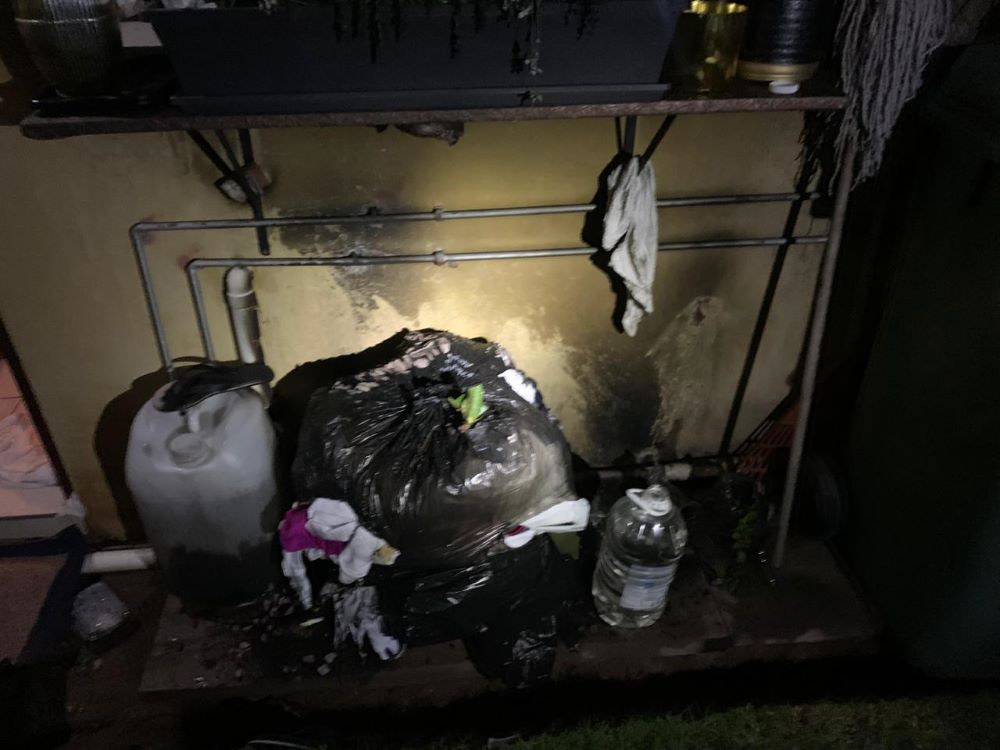
Scorched walls and fire damage at a Piedmont Road residence following a petrol bomb attack by land invaders on 30 March 2026. Residents say the attacks are intended to intimidate them into silence while illegal occupation of adjacent private land continues unchallenged. Photo: Supplied
While law-abiding ratepayers in the leafy Sherwood and Mayville suburbs pay their municipal bills on time, sleep with one eye open, and watch their property values evaporate, Ethekwini Municipality has allegedly ordered its own Land Invasion Unit (LIU) to stand down and let invaders run riot on private land.
The Public Dispatch can reveal that an organised group of approximately 100 people has forcefully occupied private land along Piedmont Road in the Sherwood/Mayville area, erecting shacks on property that is the subject of an active case before the Durban High Court under the Prevention of Illegal Eviction from and Unlawful Occupation of Land Act (PIE Act).
The invaders are purchasing plots for as little as R100. And the municipality’s Land Invasion Unit the very body mandated to prevent exactly this has been withdrawn from the area.
Nobody at eThekwini Municipality will say who gave the order. Nobody will explain why. And when The Public Dispatch submitted questions to the City Manager’s office, the eThekwini Municipality's spokesperson, Gugu Sisilana and her team members, Luthando Ngubane refused to respond, instead they spent the next two days arguing about which email address the questions should have been sent to. By Sunday morning, not a single question had been answered.
“We fear for our lives"
On 2 April 2026, the Piedmont Road and Surroundings Rate Payers hand-delivered a petition to the City Manager, Musa Mbhele. The document, signed by affected residents, setsout a community under siege.
The petition records that on 30 and 31 March 2026, groups of land invaders attacked ratepayers’ properties with stones and petrol bombs. Roads were barricaded with burning tyres, blocking access to the King Cetshwayo Highway (M13) and the N3 critical economic corridors linking Durban’s port to the inland economy.
Residents reported that invaders were clearing vegetation on private land with the open intention of settlingon it. The petitioners pleaded with the City Manager, Musa Mbele to intervene, writing that they feared for their lives and their property. They asked a simple question: why had the Land Invasion Unit been withdrawn from theirarea, and on whose instruction?
According to the petition, a line manager (name withheld) told residents the withdrawal was “an instruction from the top.” No further explanation was given. No alternative protection was offered. The residents were left to fend for themselves.
Five years of broken promises
The Public Dispatch spoke to the owner of the affected property, referred to here as M. Mansoor to protect his safety. His frustration was not directed at the invaders. It was directed squarely atthe municipality.
“My greatest disappointment is eThekwini Municipality,” Mansoor told The Public Dispatch.
He explained that there are shack dwellers on his property whose structures were marked for removal and relocation five years ago.
“That was five years ago but nothing happened,” said Mansoor.
A PIE Act case is currently before the courts dealing with those original occupiers. But while that case drags on, a new wave of invaders has arrived and they are not waiting for any legal process.
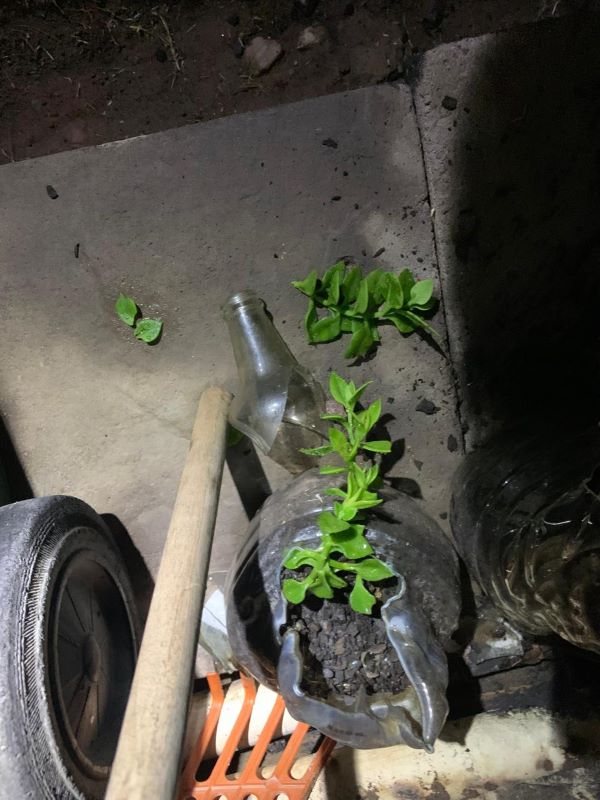
“There are new shack dwellers who are now forcefully invading my property.They are bombing residents’ houses with the intention of instilling fear and invading the land,” Mansoor revealed.
The message is clear: terrorise the neighbourhood, and the land is yours.
“We have protection”
In a development that should alarm every property owner in KwaZulu-Natal, the ring-leader of the invading group refused to give out her name however she spoke openly about the invasion. She confirmed what residents have long suspected, that the group is occupying the land illegally. She made no attempt to deny it. She said they had been informed that eThekwini Municipality would not disturb them.
She acknowledged that there are long-standing shack dwellers on the property whose presence is the subject of a known legal dispute. But she said her group made a calculated decision: if those occupiers had faced no consequences in five years, why wouldthey?
“We decided to populate that area because other shack dwellers have done it and nothinghappened to them, so we’re doingthe same,” said the ring leader.
She went further. She said the group targeted the Piedmont Road area specifically because they have the protection of eThekwini Municipality officials. She boasted that approximately 100 people have already settled on the land and that more shacks willbe built.
Multiple residents independently confirmed the same account, a top official from eThekwini Municipality gave these invaders a green light and assured them they would not be removed. To prove the point, the municipality sent the Land Invasion Unit to the area then allegedly withdrew it. The invaders were left to do as they pleased.
R100 a plot: the commodification of stolen land
The Public Dispatch has also established that plots on the invaded property are being sold for as little as R100 each. The sale of illegally occupied land is not merely a land invasion, it is an organised criminal enterprise.
The selling of plots on private land without the owner’s consent may constitute fraud,trespassing, and potentially contravene the provisions of the Spatial Planning and Land Use Management Act (SPLUMA) as well as eThekwini’s Planning and Land Use Management By-Law of 2016.
Parliament is currently considering an amendment to the PIE Act that would criminalise the incitement and facilitation of land invasions, including where financial exchanges occur. The Piedmont Road invasion is precisely the kind of scenario the amendment seeks to address. But for now, the law remains a blunt instrument and the municipality appears to have no interest in wielding even the tool sit already has.
A crisis eThekwini admits it cannot contain
The Piedmont Road case is not an isolated incident. It is the latestin a pattern of land invasions that eThekwini’s own officials have described as occurring 'on an almost hourly basis' across the metro.
In February 2026, the municipality’s Security Management Services Directorate presented a land invasion strategy to the eThekwini Executive Committee (Exco), acknowledging that its Land Invasion Unit has just 70 permanent staff, a number it described as critically insufficient.
The directorate requested R3 million for a tactical training budget ahead of the 2026 local government elections, warning that land invasions typically escalate during election periods as politicians use land allocation as a campaign tool.
KwaZulu-Natal has been a flashpoint for landinvasions for years. From Cato Manor to Tongaat to Cornubia, private and public land has been systematically invaded, often with allegations of political facilitation.
Former eThekwini mayor Zandile Gumede publicly condemned land invasions during her tenure, acknowledging they disrupted municipal development programmes and threatened the city’s greening and housing strategies. Her words changed nothing.
The eThekwini Land Invasion Unit operates under the Durban Metropolitan Land Protection Act of 1999 and the PIE Act. Its mandate is to monitor, prevent, and respond to illegal occupation. When that unit is deliberately withdrawn from an active site, where a court case is pending and residents are under violent attack the municipality is not merely failing in its duty. It is facilitating the invasion.
What the law says and what the municipality ignores
Section 26(3) of the Constitution of South Africa states that no person may be evicted from their home without a court order.
The PIE Act gives effect to this right by prescribing the procedures for lawful eviction. But the Act was designed to protect vulnerable occupiers from arbitrary removal not to provide cover for organised invasions of private property backed by public officials.
Chapter 10 of the Constitution sets out the values governing public administration. These include accountability, transparency, and responsiveness to the public’s needs. When a municipality withdrawsits anti-land-invasion unit from a site where ratepayers are being petrol-bombed, andwhen the ringleader of the invasion openly states she has municipal protection, those constitutional values are not being tested. They are being violated.
EThekwini’s Planning and Land Use Management By-Law of 2016, enacted under the Municipal Systems Act, provides for compliance and enforcement of land use regulations. The illegal erection of structures on private land without the owner’s consent, without zoning approval, and without any planning authorisation is a direct contravention of this by-law.
The municipality is both the enforcing authority and, in this case, the alleged enabler of the breach.
Days of silence
The Public Dispatch submitted detailed questions to City Manager Musa Mbhele and the eThekwini Communications Directorate. The questions asked who ordered the withdrawal of the Land Invasion Unit, whether there had been political interference, what steps were being taken to protect residents, and whether the municipality accepted that its conduct constituteda failure of duty.
The municipality’s response was not to answer the questions. It was to argue about process.
Sisilana replied that she was not at work and that all media enquiries must be directed through designated contacts, regardless of whether the petition named the City Manager directly. She insisted this was required by the municipality’s internal Marketing and Communications Policy.
When pressed, she escalated her response, stating she would formally engage SANEF over the matter and warning that other journalists comply with the municipality’s preferredchannels.
Nondumiso Mbuyazi, the second designated contact, was on leave until 14 April. Luthando Ngubane, the third, acknowledged the enquiry on Thursday morning but attempted to reset the 24-hour response clock from the time of his acknowledgment not from when the questions were first submitted.
Ngubane then asked The Public Dispatch to provide the municipality with further information, including details about land ownership, to help the municipality investigate a matter involving its own operational unit on land that is the subject of a case in its own jurisdiction.
By Sunday, 12 April days after the original submission and ten days after the petition was hand-delivered to the City Manager, not a single substantive response had been received.
The municipality was given a reasonable opportunity to respond. As usual, it chose instead to police which inbox was used.
What this story is really about
This is not just a story about a land invasion in Sherwood. It is a story about a municipality that has apparently decided that some residents deserve protection and others do not. It is a story about public officials who may have given private assurances to land invaders while publicly claiming to fight land invasions. It is a story about a Communications Directorate more concerned with controlling the flow of questions than with providing answers. And it is a story about a landowner who has waited five years for the municipality to act, ratepayers who are being attacked in their homes, and a ringleader who can say, without fear, that she has municipal protection and that more shacks are coming.
The residents of Piedmont Road are not asking for anything extraordinary. They are asking their municipality to do its job. So far, the answer has been silence.