Playhouse doubles down: DSAC ducks while defending Bukhosini’s 20-year dual-role disaster
The Playhouse Company saga reveals a lack of Council and DSAC oversight, threatening the integrity of publicly funded arts and productions.
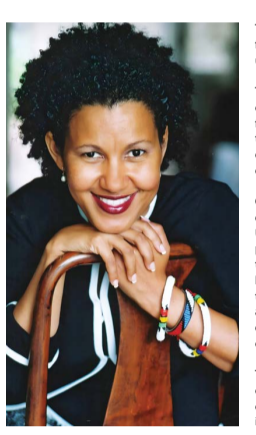
Linda Bukhosini stands at the center of a heated debate over institutional accountability. (Image: Playhouse)
In a stunning display of institutional arrogance dated 10 April 2026, The Playhouse Company has doubled down on its embattled leadership model. The Playhouse's Council has also dismissed legitimate concerns from the Cultural and Creative Industries Federation of South Africa (CCIFSA) Task Team with bureaucratic contempt and self-congratulatory spin.
At the centre remains Linda Bukhosini, the woman who has worn both the CEO and Artistic Director hats for nearly two decades, while the province’s flagship state-funded theatre institution quietly suffocates local creativity, shutters vital infrastructure, and demands independent producers subsidise its survival.
This latest development, triggered by CCIFSA’s engagement on 30 March 2026, exposes the unaccountable power centre, selective amnesia on governance best practice, and a Department of Sport, Arts and Culture (DSAC) that washes its hands of oversight.
The Playhouse’s own words, and DSAC’s limp non-response, paint a damning picture of a once-proud institution reduced to a personal fiefdom propped up by 15 clean audits while stages go dark and artists are treated as beggars.
Playhouse’s stonewalling: “Nothing unusual” about one woman holding all the power
In its official response to CCIFSA, The Playhouse Company flatly rejects any scrutiny of its leadership structure.
On the proposed CCIFSA Advisory Forum, it declares:
"The constitution of The Playhouse Company Council is governed by the Cultural Institution’s Act including all Governance Frameworks thereof. CCIFSA’s proposal falls outside of The Playhouse Council mandate.”
On the demand for an investigation into operations, the Playhouse Company said:
“Council’s position is firm and explicit on this matter. No investigation will be instituted without factual, substantiated evidence of wrongdoing. Investigations have cost implications and are only justified where there are credible allegations of misconduct or criminality. To date there are no audit findings nor governance processes that have indicated wrongdoing. Council invites CCIFSA to submit concrete evidence, should any exist. In the absence of such evidence, the request for an investigation is rejected.”
And in the most breathtaking defence of Bukhosini’s dual role, they responded:
“... there is nothing unusual with one person performing the dual responsibility and accountability of Strategic and Corporate Leadership and Artistic Directorship of the Entity. Such examples abound in many arts organisations both in South Africa and abroad. Two of DSAC Performing Arts Institutions (PAIs) currently do not have the Artistic Director position in their organograms… The Baxter Theatre Centre, the Klein Karoo National Arts Festival and several other prestigious arts organisations have one person performing these dual responsibilities. Likewise in Art Centres in KZN. There is also a huge cost saving derived from combining such positions.”
The Pyramid Framework
The Playhouse further claimed it was directed by the KZNDSAC to operate at the "apex of a Pyramid Framework," focusing on "high-level productions, commercial productions and productions that have the potential to be monetized". However, the National DSAC claimed to be "not familiar with the referenced ‘Pyramid Framework,’ exposing a startling lack of communication between provincial directives and national oversight.
The document then launches into a glowing CV of Bukhosini herself:
“The current incumbent is suitably qualified to hold both positions. She holds both a Bachelor’s and Master’s of Music degrees from the world-renowned prestigious Juilliard School… Through her leadership at The Playhouse Company this Entity has accomplished 15 years of successive, clean audits as well as artistic programming that feature world renowned artists and national icons…”
This is an inward-looking mindset that artists have decried for years. While the Cultural Institutions Act 1998 (Act 119 of 1998) does place the affairs of flagship institutions under a Council and CEO (Section 5(2)), it explicitly does not mandate or even encourage fusing the CEO role with Artistic Director.
The Act requires the Council to appoint a CEO as Accounting Officer in consultation with the Minister nothing more. Best practice across South Africa’s other major theatres (Market Theatre, Joburg Theatre, Artscape, South African State Theatre) demands separation precisely to create checks and balances. Playhouse’s cherry-picked examples ignore this national norm.
DSAC’cowardly evasion: "not our problem”
DSAC's response to pointed questions about the Playhouse’s operational mandate and governance is even more damning in its detachment.
Spokesperson for DSAC, Stacey Lee Khojane said:
“The Playhouse Company executes its mandate in accordance with its approved Annual Performance Plan (APP), which is approved by the Executive Authority and tabled in Parliament. Matters relating to leadership and management fall within the purview of the Council of the Playhouse Company.”
“The Department is not familiar with the referenced ‘Pyramid Framework.’ Strategic planning is guided by government priorities, as well as the mandates of both the Department and the entity,” Khojone said.
This is bureaucratic buck-passing at its finest. DSAC refused to address the commercial pivot that Playhouse itself admits was directed by KZNDSAC’s Pyramid Framework, a focus on “high-level productions, commercial productions and productions that have the potential to be monetized.”
The Revised White Paper on Arts, Culture and Heritage (2017) and the original 1996 White Paper explicitly called for transformation: shifting from production houses to receiving houses while channelling funds through the National Arts Council (NAC) to support independent producers and grassroots access.
Instead, Playhouse now charges independents unavoidable minimal expenses under a 70/30 box-office split because, as it admits:“The Playhouse Company does not receive any funding to subsidize their productions.”
The human cost: Workshop closure, R71 Million losses, and artists as beggars
While boasting clean audits, The Playhouse has surrendered its Workshop Facility (the Mayville costume, props and set-building hub) back to the KZN Department of Public Works because it “could no longer afford close to R3 million to run this Facility.”
This is the same “painful resolution of cost savings” that has already triggered petitions, protests and accusations of favouritism dating back to 2016 and 2023.
Artists have long accused Bukhosini of treating community art centres like “beggars,” reducing benefits without consultation, and prioritising safe, revenue-friendly or politically aligned programming. Recent reports reveal R71 million in accumulated losses over five years despite its wholly-owned status under DSAC.
Independent producers now subsidise the very institution meant to nurture them. CCIFSA’s Task Team raised these issues.
The dual role: creative death sentence and not cost-saving genius
The workload argument is irrefutable. One person juggling strategic financial oversight and day-to-day artistic curation in a resource-starved environment produces exactly what we see: conservative programming, sidelined bold or provincially rooted work, and decisions that favour financial prudence over public service.
There is no separate administrative voice to argue that a risky KZN play is a necessary cultural investment when the same person has already labelled it a liability.
This is not governance, it is centralised control masquerading as efficiency.
The Public Finance Management Act (PFMA) demands accountable, transparent use of public funds by Accounting Officers. It does not envision one individual wielding unchecked artistic and financial power.
The Cultural Institutions Act’s framework was meant to promote vibrant, accessible institutions, not insular relics clinging to 20-year-old exceptions.
Enough is enough: Time to separate the roles or close the Curtains
Fifteen consecutive clean audits are impressive on paper. They mean nothing when the workshop is shuttered, local voices are silenced, and KwaZulu-Natal’s theatre ecosystem faces collapse.
Playhouse’s 10 April 2026 document and DSAC’s evasive replies confirm what artists have screamed for years: the dual role creates an unaccountable power centre where artistic decisions serve administrative caution, and saving money trumps brave creative work.
The Council and DSAC must act. Separate the CEO and Artistic Director roles. Restore the workshop. Open genuine consultation instead of demanding evidence from the very sector you are strangling. Otherwise, this “flagship” institution will stand as a monument to what happens when one person’s ego and a department’s cowardice are allowed to kill an entire province’s artistic soul.
At the time of publishing The Playhouse Company and CCIFSA had not responded.
NB: We don’t just report the story; we provide the proof. The full, unedited response from The Playhouse Company Council is available for public scrutiny in our Evidence Locker