Taxpayers bankroll international tour: The public is kept in the dark
As the publicly funded orchestra prepares for a major December tour, questions remain over what it discloses about public money.
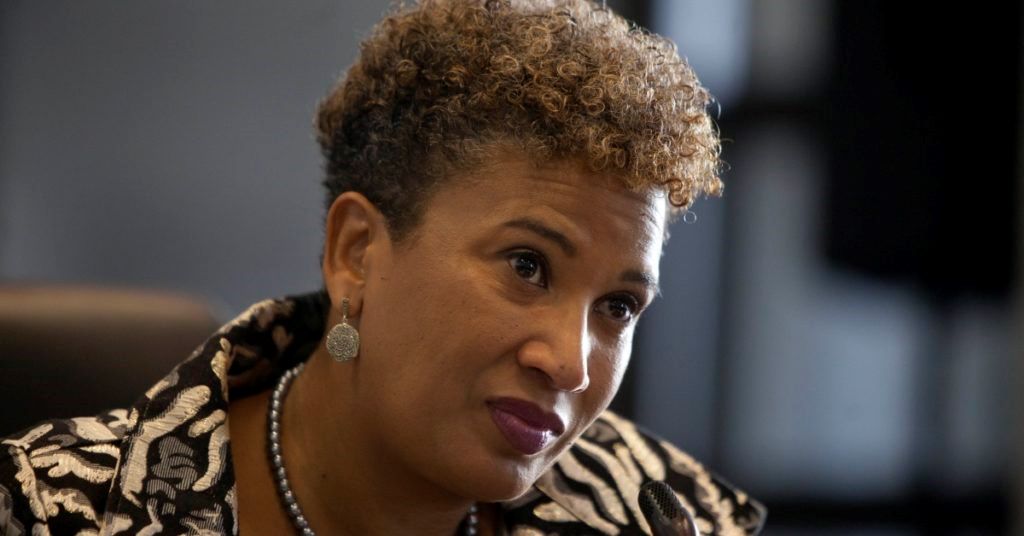
Justice Leona Theron chairs the MNPO board as questions remain over the tour’s finances.
The Mzansi National Philharmonic Orchestra is preparing for another major national tour, with internationally acclaimed violinist Maxim Vengerov due to perform in Johannesburg, Cape Town and Gqeberha in December.
But behind the concert programme is a question the orchestra has yet to answer, what will the tour cost, how much of that cost will be covered by public money, and how much will the international artists be paid? The questions matter because MNPO is substantially funded by the public.
The orchestra's own website records that it receives an annual grant from the Department of Sport, Arts and Culture (DSAC) administered through the National Arts Council. The Public Dispatch has previously established that MNPO has received R134.715 million in public funding since 2021. That does not mean the December concerts are wholly or directly paid for by taxpayers. Establishing that would require the underlying expenditure and funding records.
But it does mean the public has a legitimate interest in understanding how an organisation receiving substantial state funding finances major productions. And the transparency question becomes more consequential because the organisation's chairperson is a serving Constitutional Court judge.
The unanswered questions
As reported before, The Public Dispatch did ask MNPO what the December tour will cost, what proportion of that cost will be met from its public funding, and what the international guest artists will be paid. DSAC was also approached because it directs the funding arrangement but it did not respond.
The Office of the Chief Justice was asked questions concerning Justice Theron's role as chairperson and the judicial implications of her involvement with an organisation receiving substantial public funding. It did not respond instead it referred the questions back to the orchestra.
MNPO has also not provided the requested financial figures. That leaves a straightforward accountability question. How transparent should an organisation be when substantial amounts of its funding come from the public?
Who is responsible for answering?
It would be easy to treat the refusal to provide figures as an operational matter for MNPO management. But transparency about an organisation's use of public money is also a governance issue. A board is ultimately responsible for the governance and oversight of an organisation. Its chairperson does not personally control every operational decision, but occupies a highly visible position in that governance structure.
MNPO's chairperson is Justice Leona Theron. That fact does not establish wrongdoing. Nor does it mean that a judge is prohibited from serving on a non-profit company's board. In fact, the Judicial Code of Conduct expressly contemplates judges undertaking certain extra-judicial activities, including serving as directors of non-profit companies.
When a Judge chairs a publicly funded organisation: A threat to public confidence
Organisations do not recruit judges by accident. A judge at the head of a board is an assurance to the department writing the cheque, to funders, to contracting parties, to the public..
A judge serving on a board can bring considerable public credibility to that organisation. That is one reason the Code does not impose a blanket prohibition on judges participating in public-interest activities. But the same public standing creates an additional responsibility.
Article 5(2) of the Code of Judicial Conduct provides that all activities of a judge must be compatible with the status of judicial office.
The accompanying notes emphasise public trust and the avoidance of both impropriety and the appearance of impropriety. The assessment is objective and considers the perspective of a reasonable person. The question, therefore, is not whether Justice Theron has personally benefited from MNPO's public funding. There is no evidence presented here that she has.
The question is whether the governance and transparency surrounding an organisation she chairs are capable of affecting public confidence in the judicial office she simultaneously occupies. That is a question the applicable judicial framework leaves to be considered on the facts.
Permission is not the end of the question
The Code does not simply ask whether a particular outside activity is technically permitted. Its provisions on extra-judicial activities also address public confidence in a judge's independence and impartiality, as well as the status of the judiciary.
Article 14 permits certain extra-judicial activities, while placing limits on activities that are incompatible with confidence in the judge or could undermine judicial independence, the separation of powers or the status of the judiciary.
The Code also recognises that judges may be asked to perform non-judicial functions for or on behalf of the state, while requiring respect for judicial independence and the separation of powers. None of those provisions establishes that Justice Theron's chairmanship is improper.
They establish the framework against which the continuing compatibility of a judge's outside activities can be considered. And that makes the transparency surrounding MNPO relevant. The issue is not simply that a judge's name appears on the board. It is that the board oversees an organisation receiving substantial public funding, while basic questions about the financial arrangements of a major public-facing programme remain unanswered.
The public-money question
MNPO's public funding is not a minor part of its existence. The organisation says it receives an annual grant from DSAC through the National Arts Council. It also describes its artistic programme as including national performances, tours and support for other orchestras and musical development initiatives.
The Public Dispatch has previously reported on the substantial sums allocated to MNPO and on disputes concerning its distribution of funding to other orchestras. Those issues do not need to be repeated here. They matter now for one reason: they establish why the public has an interest in the financial information behind MNPO's activities.
That brings the focus back to a basic accountability question, where is the money going? The Public Dispatch is not asking the MNPO to publish confidential contracts or commercially sensitive terms.
The issue is whether the organisation can provide the public with the basic financial picture, what the tour will cost, how it is being funded, what major expenditure categories are involved, and what amount is being paid to international guest artists.
It is also a question of governance, what process approved the expenditure and how will the spending ultimately be reflected in the organisation’s financial reporting?
Those questions were put to the relevant institutions including DSAC and MNP0 and there was no response.
The buck-passing problem
The unanswered questions also expose an unusual problem. The Department, which directs the public funding arrangement, has not responded. The Office of the Chief Justice directed MNPO-related questions back to the orchestra. And MNPO has not provided the requested financial figures. That creates a circle in which the organisation receiving public money is the institution being asked to explain how that money is being used, while the public authorities connected to the funding arrangement have not provided the answers either.
For an ordinary private organisation, that might primarily be a corporate governance concern. For an organisation substantially funded by the state, it becomes a public accountability issue. And when the organisation's board is chaired by a serving Constitutional Court judge, it inevitably raises a further question about public confidence.
That is not a finding that Justice Theron has done anything wrong. It is a question about the standards of transparency surrounding the institution she chairs.
What Parliament can and cannot see
The issue extends beyond MNPO. The Public Dispatch asked Parliament's Portfolio Committee on Justice and Constitutional Development how many serving judges hold outside directorships or governance positions in organisations receiving substantial public funding.
Committee chairperson Xola Nqola provided a detailed written response. The response is significant because the judicial disclosure framework already requires judges to disclose certain registrable interests.
"The 2024/25 JSC Annual Report confirms that 251 serving judges disclosed their registrable interests. However, it does not provide a consolidated figure for judges holding outside directorships or indicate whether those entities receive public funding. This should be confirmed with the JSC or Registrar," Nqola said.
The committee was also asked about access to the public portion of the Register of Judges' Registrable Interests.
"This is an operational matter for the OCJ and Registrar. The Committee does not administer the Register and therefore cannot provide access statistics or comment on the OCJ's procedures," he continued.
The committee was then asked whether the existing distinction between the public and confidential portions of the register adequately deals with situations where judges hold significant positions in organisations receiving public money. Nqola said the current distinction was broadly appropriate because it balances transparency, privacy and judicial independence.
"However, the Committee believes it may be worth reviewing whether significant unpaid governance positions, such as chairpersonships or trusteeships, in entities receiving substantial public funding should also be expressly disclosed. Any reform should be targeted and should not compromise legitimate privacy protections," he said.
That is potentially important beyond the MNPO case, it raises a broader question about whether the existing disclosure framework captures all outside governance positions that may have public-interest significance.
The Chief Justice question
Nqola said that there is no blanket requirement for the Chief Justice to approve every such appointment and that the requirements depend on the nature of the appointment and the applicable legislation. He emphasised judicial independence and separation of powers.
On situations where a serving judge leaves judicial duties to perform a non-judicial function, he said:
"Where a serving judge is required to leave judicial duties to perform a non-judicial function, the involvement of the Chief Justice or relevant head of court is an important safeguard. The Madlanga appointment was distinguishable because it followed the Chief Justice's recommendation and the judge was due to leave active service shortly afterwards."
That does not answer the separate question of a part-time chairpersonship held while a judge remains on the Constitutional Court. It does, however, establish that the applicable safeguards depend on the circumstances of the appointment.
The questions that remain
The issue is ultimately a straightforward one. The Vengerov tour has been announced. The artists have been named. The dates have been published. What remains unclear is the financial picture behind the production.