Tembe threatens as Justice Theron dodges questions over Millions
Taxpayers fund it, but MNPO won’t disclose what those millions are paying for as questions mount over international artists
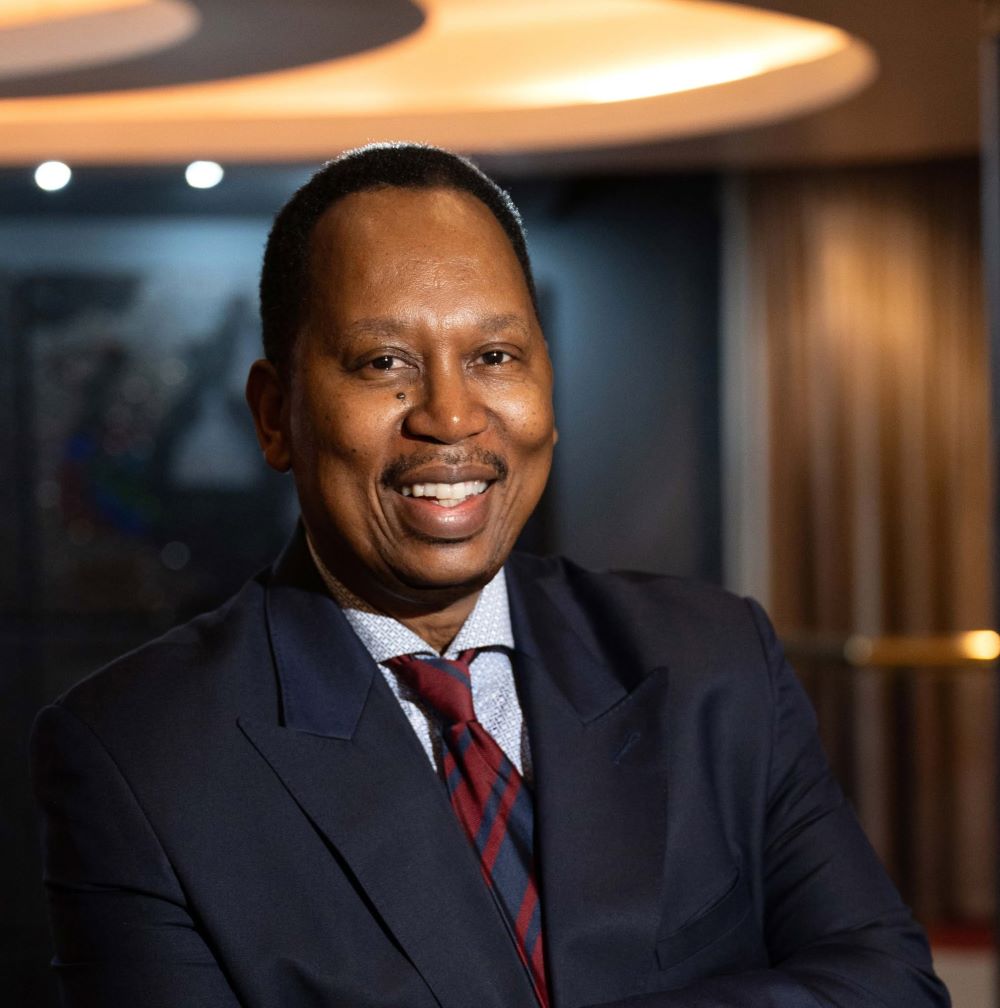
Bongani Tembe: MNPO boss under fire over public funds.
The Mzansi National Philharmonic Orchestra's (MNPO) latest national tour, Mzansi Meets the World brings internationally renowned artists to South Africa as part of celebrations marking the orchestra's fifth anniversary.
The event is marketed as a celebration of South Africa’s National Orchestra.
Among the guest artists are acclaimed violinist Maxim Vengerov and conductor Joseph Young.
But behind the international glamour is a question that the orchestra, MNOP, its leadership and the Department of Sports Arts and Culture (DSAC) responsible for overseeing public funding have failed to answer adequately:
Who is paying for it and how much?
The MNPO has received approximately R134.7 million in public funding since 2021, according to information previously provided to The Public Dispatch by the National Arts Council (NAC).
The NAC has confirmed that the money allocated to the orchestra is ring-fenced, with the funding allocation determined by the DSAC.
That makes the expenditure surrounding the 2026 tour a legitimate matter of public interest. Particularly when international artists are involved.
There is nothing improper about a publicly funded cultural institution employing internationally renowned musicians or conductors. In fact, international collaborations can expose South African musicians to global standards, build audiences and contribute to the development of the country’s orchestral sector.
But international prestige does not create an exemption from accountability. The questions are straightforward:
- How much are the artists being paid?
- Who contracted them?
- Who approved the expenditure?
- Which funding stream is paying for it?
- Were agents or intermediaries involved?
- How much did they receive?
- And what did taxpayers ultimately pay for the entire engagement?
When The Public Dispatch attempted to obtain answers, however, the response was not transparency. It was silence, redirection and ultimately a threat.
The questions
As part of this investigation, The Public Dispatch approached five parties.
MNPO CEO Bongani Tembe was asked about the tour’s funding structure, the expenditure involved and whether the MNPO board had approved the spending.
Justice Leona Theron who is the MNPO board chairperson, was approached in that specific capacity and asked what she personally knew about the funding of the tour and whether the board had approved the expenditure.
DSAC was asked about its oversight of the ring-fenced funding and whether it was aware of concerns surrounding the expenditure and the interaction between the MNPO and journalists seeking answers.
The two international artists, Vengerov and Young were separately approached with questions concerning their engagements.
The questions included whether they could confirm their participation, who had contracted them, the approximate value of those fees, whether they had any financial or governance relationship with the MNPO beyond their performance engagements.
They were also invited to place anything they wished on the record. They did not respond
OCJ won't let Justice Leona Theron answer for herself
The Office of the Chief Justice (OCJ) redirected the queries to the MNPO.
However, the questions put to Justice Theron were addressed to her directly and expressly framed in relation to her role as chairperson of the MNPO board.
They sought to establish what she knew about the funding of an international tour involving an organisation whose board she chairs, and whether the board had considered or approved the expenditure.
The spokesperson Lusanda Ntuli, responded on behalf of Theron, she wrote:“Any issues related to the MNPO should be directed to that organisation. You have indicated below that the questions are posed to Justice Theron in her capacity as Chairperson, as such it is only correct that any media enquiries in this regard be directed to that organisation and they will handle enquiries through their own processes.”
The Public Dispatch replied, pointing out that questions concerning a chairperson’s own knowledge and participation in board governance are not necessarily the same as operational questions concerning the organisation.
The publication also asked the OCJ to clarify whether its position was that a sitting judge who holds an outside directorship would not personally answer questions concerning the exercise of that role.
That question remained unanswered by the deadline.
To be precise, Justice Theron was not simply ignored or unavailable. Her office responded. But the responses redirected questions concerning her role as MNPO chairperson back to the very organisation she chairs. That leaves a basic accountability question unresolved.
Then came Tembe’s threats
Tembe did not answer the tour-funding questions either instead he sent an email, he wrote:
“We are getting calls from international guest artists that you are writing to them regarding their performances with Mzansi Philharmonic such as conductor Joseph Young, this is now tantamount to interfering with the operations of the national orchestra.”
He then added:
“Please desist from doing this, otherwise we will take action against you.”
The Public Dispatch declined to desist.
Tembe was asked to identify the specific communication he considered improper, explain the factual and legal basis for describing a journalist’s questions to contracted artists as 'interference', and clarify what 'action' he was threatening. He did not provide those particulars.
Instead, after The Public Dispatch sent another reminder concerning the outstanding questions, Tembe sent a second email. Its subject line was:
"Aggressive interference with the operations of the MNPO".
This time, the allegation was different. Tembe wrote:
“We are getting direct reports that you are calling musicians who play for the Mzansi National Philharmonic Orchestra clearly with the view of harming the reputation and the operations of the Orchestra and its management.”
He continued:
“Musicians have nothing to do with the governance of the Orchestra and what you are doing has a potential of dividing the orchestra musicians against each other.”
He concluded by accusing this publication of having: “a biased and pre-determined negative agenda against the MNPO” and described the alleged conduct as “destructive behaviour”.
There is, however, a problem with that allegation. This publication did not call MNPO musicians instead emails were sent to their booking agents.
The Public Dispatch also contacted Tembe himself as the MNPO’s chief executive and Justice Theron in her capacity as board chairperson. All of them did not respond.
What does a Vengerov booking cost?
There is no publicly available standard booking fee for Maxim Vengerov. His international booking representation requires prospective clients to submit a booking enquiry rather than publishing a fixed performance fee.
Vengerov operates at the highest level of the international classical-music market, with engagements at major international venues and with leading orchestras.
The Public Dispatch could not independently establish the fee being paid to Vengerov for the MNPO tour by the publication deadline.
And it would be irresponsible to manufacture a figure simply because the artist is internationally renowned.
The answer has to come from the documentary record. The question is not whether Vengerov is worth his fee.
It is whether South African taxpayers should be expected to fund an international engagement without being told what it cost.
The artist’s performance fee would potentially be only one component of the expenditure.
The total public cost could include international flights, accommodation, local transport, visas, insurance, hospitality, management or agency commissions, production costs and other contractual expenses.
Without the contract, invoices and payment records, the public cannot establish whether the headline artist fee was R500,000, R2 million, R5 million or substantially more nor what additional costs were incurred around the engagement.
Those figures are not being presented as estimates of Vengerov’s actual fee. They illustrate precisely why the contract and payment trail matter.
If the MNPO believes the public has no right to know, it should explain why. If the expenditure was properly authorised, properly recorded and consistent with the purpose for which public money was allocated, disclosure should strengthen rather than damage the institution.
That is the accountability question
Why the funding scale makes this unavoidable.
According to information previously provided to The Public Dispatch, the MNPO received approximately R21.583 million annually in its earlier funding years, with the allocation later increasing, bringing the total identified public funding to approximately R134.715 million.
The NAC has also explained that the funding was ring-fenced and that the allocation was determined by the funder rather than the NAC. That raises a simple accountability chain:
- Who allocated the money?
- Who is received or benefiting from it?
- Who controlled it?
- What was it spent on?
- What has been delivered so far?
- And ultimately: Did the expenditure achieve the public purpose for which taxpayers’ money was provided?
A publicly funded institution should be able to answer those questions without sending threats to the person asking them
The R20-million grant controversy
The demand for transparency does not arise in a vacuum. The MNPO’s financial history contains another issue that warrants scrutiny.
In 2022, the orchestra recorded R20 million in grants to regional and youth orchestras, including a R3.2 million amount associated with the Cape Town Philharmonic Orchestra.
The Cape Town Philharmonic, however, rejected the proposed grant.
Its board subsequently questioned why the amount appeared in the MNPO’s annual report and audited financial statements as part of the R20 million grant expenditure when the money had not been received.
Tembe’s position was that the R20 million represented board-approved grants and that amounts approved but not yet paid could be recognised as accrued expenses. That explanation is part of the record.
But it does not eliminate the underlying question of whether the accounting treatment and disclosure made sufficiently clear to readers that the rejected grant had not actually been paid.
The Cape Town Philharmonic’s chairman went further, alleging that the auditors had been given information that was “misleading, or at best incomplete and questionable”.
That allegation should not be presented as established fact. But neither should it simply disappear because the parties disagree. It warrants examination.
The overlapping-governance question
There are also questions around overlapping leadership positions. Tembe has previously said that he recused himself from funding decisions involving Tier 1 orchestras.
However, documents reviewed by The Public Dispatch show that he was involved with the MNPO while also holding leadership positions at the Johannesburg Philharmonic Orchestra and KwaZulu-Natal Philharmonic Orchestra.
The MNPO subsequently distributed R3.2 million to each of those orchestras. Tembe has said that he recused himself from the relevant grant-making decisions.
But recusal from a particular decision does not necessarily resolve every question about governance, disclosure and potential conflicts.
What does the law say?
The legal position requires some care.
The MNPO is a private non-profit company rather than a public entity. The Auditor-General has previously indicated that it does not audit the MNPO in the same manner as a public entity.
But that does not mean that money originating from the public purse somehow ceases to be of public interest once it enters a private entity.
The Public Finance Management Act (PFMA) establishes principles for financial management, accountability and the management of public resources within the public sector.
Where public money is transferred to another entity, the public institution responsible for that transfer cannot simply wash its hands of the money once it leaves its account. The conditions attached to funding, the purpose for which it was allocated and the mechanisms for monitoring its use remain important.
That is particularly relevant where funding is described as ring-fenced. The question therefore is not whether the MNPO itself is a government department.
It is whether the public authorities responsible for allocating public funds have sufficient mechanisms to ensure that those funds are used for their intended purpose and that the public can ultimately establish what happened to them
The Companies Act and governance
The MNPO’s status as a non-profit company also does not place its directors outside the Companies Act.
Directors have duties concerning good faith, proper purpose, the best interests of the company, care, skill and diligence, and the management of personal financial interests.
That becomes relevant when an organisation’s directors or executives have relationships with other institutions that receive funding from the organisation.
Again, the existence of overlapping interests does not itself establish wrongdoing. But it creates circumstances in which transparent declarations, documented recusals and independent decision-making become especially important.
The public should not have to rely solely on assurances. The governance record should speak for itself.
Public funding does not mean automatic illegality
There is another distinction that needs to be made clearly. Paying an international artist from public money is not automatically unlawful. Nor does a large artist fee automatically constitute corruption, fraud or irregular expenditure. There is a difference between:
- expensive expenditure.
- wasteful expenditure.
- irregular expenditure.
- maladministration
- a breach of governance rules.
- fraud; and
- corruption.
These terms must not be conflated. But if evidence were to establish that public funds were deliberately misrepresented, diverted, improperly procured, fraudulently obtained or used for an unauthorised purpose, the consequences could be considerably more serious.
That is why the records matter.
PAIA and the records behind the money
The Promotion of Access to Information Act (PAIA) provides a further legal framework through which records held by public and private bodies can, in appropriate circumstances, be sought.
Section 50 provides for access to records held by private bodies where the record is required for the exercise or protection of rights, subject to the Act’s requirements and grounds for refusal.
Where informal requests fail, formal mechanisms can be considered.
Among the records of obvious public interest are agreements relating to publicly funded engagements, payment records, funding conditions, board approvals, conflict-of-interest declarations and relevant governance records.
And then there is press freedom
Section 16 of the Constitution protects freedom of expression, including freedom of the press and other media.
Journalists are entitled to investigate matters of public interest and seek responses from people who may possess relevant information.
That does not give journalists immunity from the law. It does, however, mean that disagreement with uncomfortable reporting is not itself evidence of improper journalistic conduct.
An organisation that believes a journalist is wrong has a straightforward remedy:
Answer the questions, correct the facts, provide the documents. explain the discrepancy, give the journalist the organisation’s side. What is far less useful is accusing the journalist of having a predetermined agenda while leaving the underlying questions unanswered.
What happened to the oversight?
The most troubling aspect of this episode is not that Tembe objected to the questions. It is what happened to the accountability chain surrounding the money. The MNPO did not answer the substantive tour-funding questions put to its leadership.
The OCJ redirected questions concerning the MNPO chairperson back to the organisation she chairs. The two international artists also did not respond.
DSAC, the department responsible for the broader policy and funding environment, was asked whether it was aware that an executive of a publicly funded institution had twice written to a journalist threatening “action” over questions concerning public expenditure. It did not respond.
The result is an extraordinary vacuum. The organisation receiving public money does not answer the questions. The chairperson’s office redirects the questions. The funding department does not respond. And the journalist asking where the money went is threatened and accused of trying to damage the organisation.