The Council is back and so is everything that was wrong with it. Here’s what it means for the Arts Industry
A major courtroom setback for Gayton McKenzie as the NAC council returns by court order.
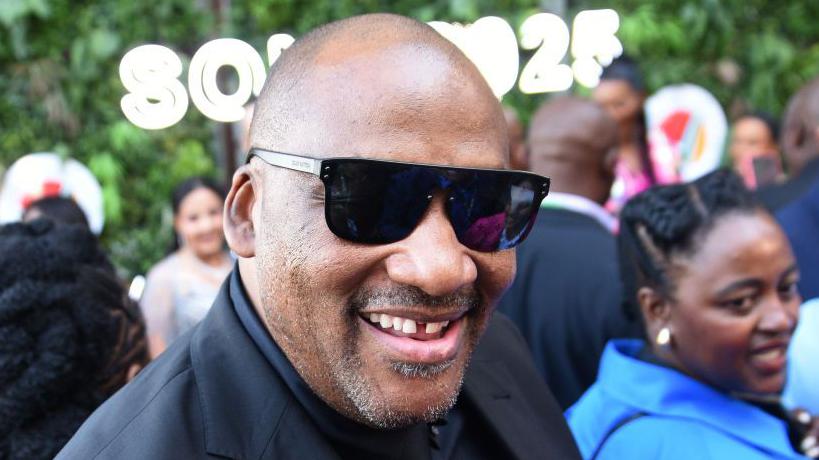
The Minister dissolved the council. The court brought it back. The legal battle has only just begun.
Sport, Arts and Culture Minister Gayton McKenzie's decision to dissolve the National Arts Council (NAC) has been halted by the Gauteng High Court in Pretoria, delivering a major legal setback to the Minister.
In a judgment handed down on Friday, 31 July 2026, Judge A. Millar granted interim relief to 11 former National Arts Council members, led by Twain Siboniso Ngwenya, who had approached the court on an urgent basis.
The applicants succeeded in every aspect of their application.
The court temporarily suspended McKenzie's decision to dissolve the council and reinstated the former council members pending the final determination of the dispute. Judge Millar also prohibited the Minister from implementing the dissolution, taking any further steps arising from that decision, or commencing or completing any process to appoint a replacement council while the interim order remains in force.
In addition, the court ordered McKenzie to pay the applicants' legal costs, including the costs of two counsel on Scale C, one of the most punitive cost orders available.
The ruling marks a significant victory for the former council members and temporarily restores the governance structure of the NAC while the legal challenge continues.What the ruling actually means and what it doesn't.
The order is interim, not final. Lawyers refer to it as Part A of the application. Its purpose is to preserve the status quo while Part B, the full review of whether McKenzie's decision to dissolve the NAC was lawful will be heard at a later date.
In simple terms, the court has pressed a pause button. Judge Millar did not rule that McKenzie acted unlawfully or that he lacked the power to dissolve the council.
In fact, the judge was careful to say he was making no finding on whether the minister had reasonable grounds to dissolve the council. Instead, the court found that, on the papers before it at this stage, the Minister's decision "does not at this stage... withstand scrutiny.
It also found that allowing the dissolution to remain in force while the review proceeds would cause greater harm, leaving the National Arts Council without a governing body.
Section 5(5) of the National Arts Council Act empowers the minister to dissolve the council "on any reasonable grounds." Whether those grounds were, in fact, reasonable is the central question in Part B of the case. Until that question is finally decided, the council remains in office under the protection of the interim order.
Why the court found harm?
The court's reasoning is significant because it goes to the heart of how Parliament designed the National Arts Council to function. Under section 13(2) of the National Arts Council Act, the Chief Executive Officer manages the affairs of the NAC subject to the control of the council and reports to it. The CEO is accountable to the council, he is not a substitute for it. The Act provides no mechanism for the NAC to operate indefinitely without a council.
Judge Millar found that this was precisely the problem, he said:
"In the present matter the statutory scheme has been subverted by the summary dissolution of the Council, a specific governance structure established by the legislature in terms of the Act. It seems to me self-evident that the subversion of an Act of Parliament must reasonably permit of an apprehension of harm."
The Minister argued that the dissolution created no governance vacuum. In his answering affidavit, he contended that once the council was dissolved, the CEO became the accounting authority by operation of law and that the work of the NAC would continue uninterrupted.
The court rejected that argument. While section 14(1) designates the CEO as the accounting officer, it does not make the CEO the council. The accounting officer performs an executive role, the council remains the statutory body responsible for governance and oversight. The CEO cannot assume the council's powers simply because the council has been dissolved.
In practical terms, the court found that the dissolution left the NAC without the governing body Parliament intended it to have. That governance vacuum was a central reason why the court concluded that interim relief was necessary pending the full review.
So who is currently running the NAC?
This is where the judgment resolved one problem but created another one.
Vincent Mashale served as acting CEO from October 2025. After the council was dissolved, Lebogang Magoera was appointed on 2 June 2026 as acting CEO and designated accounting authority, effectively assuming the governance role created by the dissolution. That designation arose directly from the dissolution decision.
The Minister's dissolution letter provided that the Director-General of the DSAC, in consultation with the Minister, would determine who would act as accounting authority.
Judge Millar's order, however, goes further than simply reinstating the council. Paragraph 36.4 suspends "ANY appointment, nomination, designation or other step already taken pursuant to the impugned dissolution decision" pending the review. On its face, Magoera's designation appears to fall within that category.
So the question is, does Magoera remain the accounting authority, or does the reinstated council now resume the governance role Parliament assigned to it?
The judgment does not expressly answer that question, and it may have to be clarified by the parties or, if necessary, by the court.
Another question follows. What is the status of decisions taken between 2 June and 31 July 2026 while the dissolved council was absent? The interim order does not, by itself, invalidate everything done during that period, but it does leave those decisions open to scrutiny if they depended on authority flowing from the dissolution.
PESP 7: Thousands of artists are waiting.
The uncertainty is not merely legal. It has practical consequences for thousands of artists. Applications for Presidential Employment Stimulus Programme (PESP) 7 closed on 29 May 2026, just four days after the council was dissolved. Funding outcomes were expected by the end of August, only weeks away.
The adjudication of applications and approval of funding are functions ordinarily performed under the National Arts Council's governance framework. If those processes were carried out while the council did not exist, questions may arise about the legal authority under which they were undertaken. If they were delayed, thousands of applicants remain in limbo with the announced deadline fast approaching. That is the immediate consequence of the judgment.
Beyond the legal arguments and court proceedings are artists who applied in good faith and are still waiting to learn who is making decisions that affect their livelihoods.
The members who never asked to return.
One aspect of the judgment deserves particular attention. The application was brought by 11 former council members. The remaining members, including former chairperson Eugene Botha were cited as respondents because the relief sought affected their interests.
None of them opposed the application. The judgment records no appearance on behalf of the second to thirteenth respondents. You will recall that, shortly after the dissolution, Botha told this Public Dispatch that he respects the Minister's decision and did not intend to challenge it.
He maintained that position. Yet the interim order reinstated the entire council. Because Botha held the office of chairperson by ministerial appointment rather than election by fellow council members, the practical effect of the order appears to be that he resumes that position as well.
It is an unusual outcome, a chairperson who accepted his removal is restored to office by a court order he neither sought nor opposed.
What has not changed:
The ruling restored the council. It did not change the controversies that surrounded it before its dissolution. This is the same council that earlier this year informed Parliament that no performance bonuses would be paid for the 2019/20, 2020/21 and 2021/22 financial years, a decision that prompted industrial action by staff.
It is the same council that rejected a petition signed by more than 300 artists and employees calling for the suspension of Julie Diphofa and interim CFO Reshma Bhoola.
At the time, the council said:
"A petition, however many signatories it carries, is not evidence of wrongdoing... That investigation found no evidence of wrongdoing on the part of either Ms Diphofa or Ms Bhoola. Council considers those findings authoritative."
The council has also continued to rely on a forensic investigation conducted by Cliffe Dekker Hofmeyr, a report it commissioned and accepted but has never made public, not the report itself, its terms of reference or even a summary of its findings.
Before the dissolution, it authorised the recruitment process for permanent CEO and CFO appointments, appointed an external recruitment firm to assist and told Parliament those posts could not have been advertised earlier because the acting incumbents had been suspended.
Applications have now been closed. Under section 13(1) of the NAC Act, read with section 13(3), the appointment of the CEO is a decision of the Council. The remaining stages of the process, approving a shortlist and making the appointments therefore fall to the reinstated Council.
Meanwhile,the Public Protector's investigation into Diphofa and Bhoola remains ongoing. No findings have yet been made either against or in favour of either official.
The consequence is striking. The same council that publicly declared the matter settled now returns to office under court order and may be called upon to make decisions about the permanent appointment of the very officials whose conduct remains under investigation.
What it means for McKenzie.
The Minister now faces three broad options.
- Firstly, he can comply with the interim order and prepare for Part B, where he will have to defend the reasonableness of his decision to dissolve the council.
- Secondly, he can seek leave to appeal the interim order, although appeals against interim interdicts are generally difficult and may prolong the litigation.
- Thirdly, he can attempt to resolve the dispute that lay at the heart of the conflict. That dispute was the performance bonus issue. In a letter dated 22 April 2026, McKenzie urged the council to convene a special meeting to consider a full and final settlement, saying continued litigation was not in the public interest because legal costs already exceeded the value of the claim.
The council scheduled that meeting for 29 May. McKenzie dissolved it on 25 May.Judge Millar expressly noted the sequence, observing that it was difficult to see how the council's failure to decide a matter it had not yet been given the opportunity to consider could constitute reasonable grounds for dissolution.
The judgment also records that the Minister's late filing was condoned after he explained he had been out of the country on official duties, including attendance at the FIFA World Cup and the Commonwealth Games.
The option he had all along.
There is a fourth path, and it is the one the sector has been asking for since long before the dissolution, and that is a forensic investgation. McKenzie's problem on 25 May was not that he lacked power.
Section 5(5) already gave him the power but his problem was that he had no record to justify using it. The court's finding on this point is worth reading closely, the reference in his letter to "credible information" about certain procurement decisions, without telling the NAC which decisions were said to be questionable, could not amount to a reasonable ground.
"Similarly, the vague reference to credible information and procurement decisions without notifying the NAC which decisions were said to be questionable, could also not be a reasonable ground," said Millar J.
In other words, he acted before he had built a case. The remedy for that is to build one.
As executive authority, the Minister can commission a full forensic investigation into the NAC, or push for a Special Investigating Unit proclamation, which carries subpoena powers that a departmental review does not.
Neither requires dissolving anyone. Both produce the evidentiary record that was missing in May. That is precisely what NEHAWU and the petitioners (the artists and ordinary citizanes) have been demanding. Their petition called for a full forensic investigation, not a review commissioned and controlled by the council itself.
NEHAWU has made submissions to the Public Protector arguing the same thing. The Minister's own letters raised concerns about procurement. On this single point, the Minister and the workers who have been fighting the council want the same outcome.
Removing individual council members for cause, on evidence, with each member given a proper hearing, is a far more defensible exercise of ministerial power than dissolving an entire governance structure in one letter.
How long will this legal process take?
The short answer: far longer than the arts sector can afford to wait.
Part B is a full review under the Promotion of Administrative Justice Act (PAJA). The Minister must produce the complete record of his decision. The applicants may supplement their papers. Affidavits will follow, heads of argument must be filed and the matter must then be enrolled for hearing. Realistically, the review is likely to take many months and any appeal could extend that considerably.
Ironically, McKenzie himself told the court that appointing an entirely new council would take at least six months. The review will most likely take longer than six months. In the meantime, the reinstated council resumes office while significant issues remain unresolved.
Some of the unresolved matters include bonus dispute, the unfinished Public Protector investigation, the recruitment of CEO and CFO, the administration of PESP 7, and the pending legal challenge to the council's own dissolution.
The NAC exists to fund artists. For more than two months its statutory governance structure was suspended. It has now been restored but only temporarily, pending the court's final decision on whether the Minister was lawfully entitled to dissolve it in the first place. The petitioners wanted a forensic investigation. The Minister wanted a settlement. Employees wanted their bonuses. Artists wanted funding decisions.Two months later, the court has restored the council.None of the underlying disputes has yet been resolved.