The desperate cover-up: Joy Mbewana’s shameful crusade to bury a R51.8 million scandal
Joy Mbewana: The self-appointed CCIFSA President who tried to bully the press into silence while presiding over R51.8 million in public money scandals.
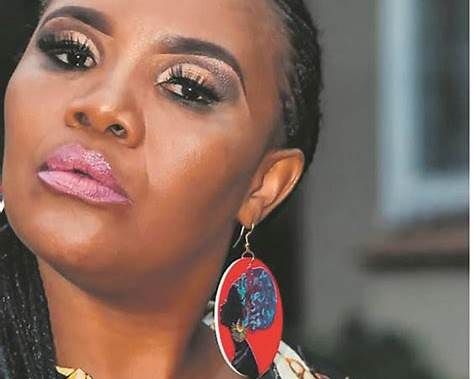
This is Joy Mbewana: the woman who demanded an apology for exposing corruption
On 17 April 2026, The Public Dispatch received a formal demand letter on the official letterhead of the Cultural and Creative Industries Federation of South Africa (CCIFSA). It was signed by Joy Mbewana.
The letter was in response to an article this publication had published the previous day, an article reporting on financial mismanagement in one of Minister Gayton McKenzie’s new CCI Sector Clusters, drawing on the Minister’s own parliamentary reply, a registered criminal case number, and on-the-record sources.
The letter demanded a retraction. An apology within seven days. An end to all critical reporting on CCIFSA and its associates. It threatened defamation lawsuits, Press Council complaints, and financial damages.
Wrapped in constitutional language and legal intimidation, the message was clear: stop digging. But there was one devastating problem for Mbewana. By the time she sent the threat, the truth was already closing in.
The forensic hammer drops, exactly as predicted
Three weeks later, the Minister released the findings of the Gobodo forensic investigation into CCIFSA. The report confirmed R51.8 million in financial irregularities, governance failures, and breaches of the Public Finance Management Act spanning a decade of public funding.
Every allegation this publication had reported and far more was confirmed by an independent forensic investigation commissioned by the government itself.
But here is what Mbewana did not want you to know, she already knew the report was coming. She had been trying to get her hands on it for weeks before she ever wrote to this publication.
The PAIA request that exposed panic
On 12 March 2026, Mbewana submitted a formal request under the Promotion of Access to Information Act, 2000 (Act No. 2 of 2000), to DSAC. She was requesting access to the CCIFSA forensic investigation report.
She was denied. The Department swiped her hand away on four separate grounds, signaling that the findings were too explosive to be shared before reaching the Minister’s desk.
Mbewana knew then that the clock was ticking so she spent the following month trying to silence anyone who dared to report on the stench of corruption she was failing to contain.
From “PLEASE RESPOND” to “WE WILL SUE YOU”
Five weeks after her PAIA rejection, The Public Dispatch published its story on financial rot in the sector clusters. Within hours, Mbewana was in the inbox, whining about “false accusations” and demanding apologies.
The following day, Mbewana escalated. She sent a formal demand letter on CCIFSA letterhead, dated 17 April 2026, repeating her demands and adding new elements:
- a full retraction,
- a public apology within seven days,
- an immediate halt to all critical reporting,
- and prior consultation with CCIFSA before any future coverage.
Then came the extraordinary part. The letter invoked Section 16 of the Constitution, the very section that protects press freedom. A constitutional shield for journalists was repurposed into a weapon against journalism itself. and an explicit threat of defamation proceedings, Press Council complaints, and legal action for reputational and financial damages.
This publication refused to apologise. We responded with cold, hard facts and invited Mbewana to do what she threatened, take us to court or shut-up. Predictably, the loud bully folded and did absolutely nothing.
President of a ghost organisation
Mbewana was elected CCIFSA President in August 2019. No elective conference has been held since. No known AGM has taken place since at least 2020. Yet throughout this period, CCIFSA continued receiving public money while allegedly failing to provide financial accountability to its own members.
Then comes the legal absurdity at the heart of this scandal. According to Companies and Intellectual Property Commission records, CCIFSA is deregistered. Under the Companies Act, a deregistered entity ceases to exist as a legal person. That means:
- it cannot sue,
- cannot contract,
- cannot litigate,
- and cannot claim reputational harm.
Which raises a devastating question, on whose authority was Mbewana threatening journalists? Mbewana’s letter of demand was written on the letterhead of an entity that does not legally exist. She threatened defamation proceedings on behalf of an organisation that has no legal personality. She demanded a cessation of coverage and threatened Press Council complaints in the name of a body that cannot, in law, be a complainant.
The timeline of a cover-up
When the events are laid out in sequence, the pattern is clear.
- August 2019: Joy Mbewana is elected CCIFSA President at Ngwenyama Lodge.
- 2020: The last known annual general meeting of CCIFSA takes place. No AGM has been held since.
- 2020–2024: CCIFSA continues to receive public funding from DSAC without holding AGMs, without releasing financial reports to its own membership, and without accounting for how funds were used.
- December 2024: Minister McKenzie tells Parliament that CCIFSA has been receiving funding for years but never reported on how the money was used. He announces CCIFSA will not receive a cent from the Department and launches a forensic investigation.
- January 2025: CCIFSA’s own office-bearers go on record with Sunday World saying they were never told about any funding and that the national leadership refuses to release reports.
- 12 March 2026: Mbewana files a PAIA request for the forensic investigation report. The Department refuses on four grounds and rejects the public interest override.
- 16 April 2026: The Public Dispatch publishes an article on financial mismanagement in McKenzie’s sector clusters. Mbewana emails the editorial address within hours, demanding an apology.
- 17 April 2026: Mbewana sends a formal demand letter on CCIFSA letterhead threatening defamation proceedings, Press Council complaints, and legal action.
- 7 May 2026: The Minister releases the Gobodo forensic report findings. R51.8 million in financial irregularities, governance failures, and PFMA breaches confirmed. The report is referred to the Hawks, the SIU, and the Auditor-General.
A decade of lawlessness and breaches of PFMA. Every single allegation Mbewana tried to suppress was actually true.
The report confirmed a systematic looting of public funds intended for the struggling artists of South Africa. While creatives were starving, CCIFSA was feasting on "salaries" and "unspent funds" with zero accountability.
After the fall: Mbewana’s pathetic meltdown
When the Minister’s media statement landed on the evening of 7 May 2026, Mbewana did not go quiet. She doubled down.
She played victim and said: “I'm always accused of being the most corrupt useless leader who stole the millions.”
She dismissed the Gobodo findings as recycled material from a previous SIU report. She questioning how much public money had been spent on this investigations.
She then attempted to redirect scrutiny toward the Minister himself, asking what had happened to R36 million allocated to the 17 sector clusters, R300 million promised at a government bosberaad, and R12 million committed to hip-hop development.
These are legitimate questions about public expenditure and The Public Dispatch will pursue them. But they do not answer the question the forensic report asks: what happened to CCIFSA’s R51.8 million? One accountability failure does not cancel another.
Most revealing was her attempt to distance herself from the findings entirely.
“Now I was not there when it all happened. I was elected in 2019,” she said.
Liar. The report covers 2014/15 to 2023/24. She presided over at least five of those years. Administration fees at a criminal 32% (triple the allowed maximum), R10 million with zero invoices, continued spending of unaccounted millions, all under her watch or overlapping her reign.
Then she turned on her predecessors, demanding they be arrested. The same predecessors she failed to hold accountable for years.
“Funny that some of the former leaders were so happy with this investigation. They must be arrested,” she said.
But if they must be arrested, as she suggests, then the question becomes, what did Mbewana do about it during her five years in office? Did she report irregularities to DSAC? Did she file criminal charges? Did she open the books to her own membership? The answer, according to her own office-bearers, is no.
The question she never answered
When the findings were released she;
- attacked the investigators,
- attacked the Minister,
- attacked her predecessors,
- and distanced herself from responsibility.
At no point did she answer the only question that matters: where did the money go?