The iron grip: How Linda Bukhosini's dual role choked KwaZulu-Natal Theatre
THE DUAL MONARCH: Linda Bukhosini, the woman who has held both the purse strings and the creative keys of The Playhouse Company for nearly two decades, facing mounting criticism over an 'iron-fisted' governance model.
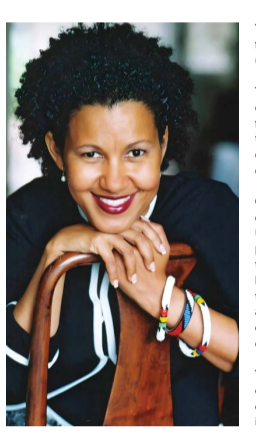
Linda Bukhosini, whose twenty-year tenure as both CEO and Artistic Director has turned The Playhouse into a fortress of centralized authority
For nearly two decades, The Playhouse Company, KwaZulu-Natal’s flagship state funded theatre institution has operated under a leadership model that most governance experts in the arts sector view as a relic of centralised control rather than a blueprint for creative excellence.
At the heart of this entrenched structure is Linda Bukhosini, who simultaneously holds the positions of Chief Executive Officer (CEO) and Artistic Director (AD).
While The Playhouse insists its model is legally sound and operationally effective, a growing chorus of artists, practitioners, and industry insiders argued that this financial housekeeping comes at a devastating cost. They argued that it stifled creativity, reduced access for local talent, increased favouritism and resulted into a collapse of the KZN’s broader theatre ecosystem.
They said that giving one person both jobs creates too much power without any oversight.
The bottleneck: one person, two hats
In most public cultural institutions, the separation of executive and artistic leadership is not just a preference, it is considered governance best practice.
This model ensures that financial oversight remains independent from creative decision making, creating internal checks and balances that protect both public funds and artistic integrity.
The CEO manages the 'HOW' while the Artistic Director manages the 'WHY'. By merging them, The Playhouse has effectively removed the internal friction that forces a theatre to justify its existence to the public.
One anonymous theatre practitioner said that:
“When one person holds both the CEO and Artistic Director roles,the impact of the workload extends beyond individual capacity. It can create a bottleneck that slows decision making and ultimately affects the wider regional arts ecosystem.”
Another one added:
“For many of us in the sector, that signals a particular governance philosophy. It suggests a system that prioritises financial stability and centralised leadership rather than the creative tension that often comes from separating artistic and administrative authority.”
These concerns are widely shared across the sector. Major South African institutions have long embraced separation:
The Market Theatre, historically a people’s theatre, maintains rigorous separation of executive and artistic functions.
Joburg Theatre, Artscape (Arts Cape), and the South African State Theatre follow suit. The recent appointment of Shane Maja as CEO at the State Theatre reinforced independent administrative oversight.
This bottleneck is more than just a paperwork problem. It is a death sentence for creativity. For artists in KZN, this double role means there is no one else to talk to if Bukhosini dislikes your idea. The same person who controls the art also controls the money. If she decides it is too expensive, that is the end of it. This makes it impossible to get a fair second opinion.
How the dual role weakens the institution
The bottlenecks are evident. Recent decisions including the closure of the long standing Playhouse's warehouse in Mayville, a home to costumes, props, and set building resources have sparked outrage.
In our previous reports, prominent directors including Edmund Mhlongo and Jerry Pooe lamented the lack of consultation.
“There was no consultation with the sector. She knows very well that by closing the warehouse she's killing KZN theatre,” Pooe said.
A petition from aggrieved artists highlights a shocking decline in number of productions from KwaZulu-Natal.
Favouritism allegations have dogged the institution for years. In 2023, community art centres accused The Playhouse of unfair treatment and reducing benefits without proper engagement, claiming many felt treated as beggars.
Contradictions with policy and law: The Cultural Institutions Act loophole
The Playhouse Council defends the arrangement by invoking the Cultural Institutions Act (CIA) of 1998 (Act 119 of 1998). In their official response, they stated:
“The Cultural Institutions Act (CIA) states that the affairs of a Declared Institution are under the control, management and direction of the Council and its Director. The Playhouse Company aligns and complies with the prescripts of this Act. Therefore, The Accounting Authority, namely the Council places greater reliance upon the prescripts of the Act and delegates the operational aspects of control, management and direction of the affairs of our entity to the Artistic Director, who is the Accounting Officer.”
They continued:
"In line with the prescripts of this Act the Accounting Officer is given full responsibility and accountability of all Artistic Direction and institutional leadership. It is important therefore that The Playhouse which has received fifteen consecutive clean audits continues to place primary and greater reliance and compliance with the prescripts of the Act rather than concerns itself or conforms to what other entities decisions are.
The Playhouse Company encourages strict compliance with the Act rather than conforming to please fleeting interests of a few which are contrary to the prescripts of the CIA. The Playhouse's organogram which is fit for purpose is reviewed by The Playhouse Council on a periodic basis as and when necessary relevant changes are made."
This reliance on the Act is legally convenient but intellectually hollow. Section 5 of the CIA distinguishes between ordinary declared institutions and flagship ones, requiring councils and CEOs for the latter, with the CEO as Accounting Officer.
However, it does not mandate combining the CEO role with Artistic Director. The Act provides a framework for oversight but does not prohibit or explicitly endorse the fusion of roles that governance best practice elsewhere rejects.
By clinging to a narrow reading that allows delegation of full responsibility to one individual, the Council sidesteps the spirit of accountability embedded in broader public finance and cultural policy.
The Public Finance Management Act (PFMA), which governs accounting officers, emphasises prudent financial management but assumes separation from purely creative functions to avoid conflicts. Other institutions interpret the CIA alongside sector norms that favour divided leadership precisely to prevent bottlenecks and capture.
King IV which is widely regarded as the gold standard for governance in South Africa, explicitly promotes the separation of powers to prevent the concentration of executive authority. By ignoring the best practice followed by the Market Theatre and the South African State Theatre, The Playhouse is not just being disciplined it’s being defiant.
The Bukhosini legacy: stability or stagnation?
Under Bukhosini’s long stewardship, The Playhouse has faced repeated accusations of being narrow-minded. Older controversies include board turmoil in the early 2000s involving allegations of racism and victimisation, and questions around family commissioning (which Bukhosini denied).
More recently, the shift from supporting local productions to cost cutting has left artists questioning whether the institution still serves its legislative mandate to facilitate and promote representative artistic works.
The result? A flagship theatre that boasts clean audits but delivers diminishing artistic returns for its province. Instead of fighting for increased arts investment, it shuts down its 'engine house' and alienate the very community it exists to uplift.
The strength of the 'iron fist' (and its fatal weakness)
The Playhouse argues that their structure strengthens the institution by ensuring a singular, streamlined vision. In their view, the dual role prevents the creative tension that can lead to deficits or identity crises in other theatres. But this strength is a mirage. A theatre institution is not a bank, its health is measured in cultural impact, not just clean audits. By prioritizing strict compliance over artistic tension, the Playhouse has become a sterile environment.
This dual role has:
- Eliminated dissenting voices becsue there is no internal mechanism to challenge the status quo.
- It has stifled leadership growth, no new generation of artistic leaders can emerge when the top two tiers of the ladder are occupied by the same office.
- Eroded trust. The perception of a closed shop prevents independent producers from engaging with the venue.
The Council’s own words betray the flaw in their philosophy. They reject 'conforming to please fleeting interests of a few' yet those 'few' include the artists, producers, and audiences the institution is duty bound to serve under the Cultural Institutions Act and the broader White Paper on Arts and Culture.
A structure out of time
The Playhouse Company still clings to an old-fashioned command-and-control model from a past era. While the rest of the country moves toward collaborative, transparent, and multi-layered governance, Durban’s flagship remains trapped in a 20-year-old loop.
The Council’s insistence that their model is fit for purpose rings hollow when the purpose of a state funded theatre is to be a dynamic, inclusive, and evolving space.
By dismissing the concerns of the sector as 'fleeting interests,' the leadership has shown its true colors: they are more interested in the prescripts of the Act than the people the Act was written to empower.
The artists have spoken. It is time for the Council and the Department of Sport, Arts and Culture to choose. Audit scores or a living theatre?