The judge, the money and the orchestra: How Theron's role raises a judicial ethics storm
A serving Constitutional Court judge faces growing scrutiny over her extra-judicial role as chairperson of the Mzansi National Philharmonic Orchestra.
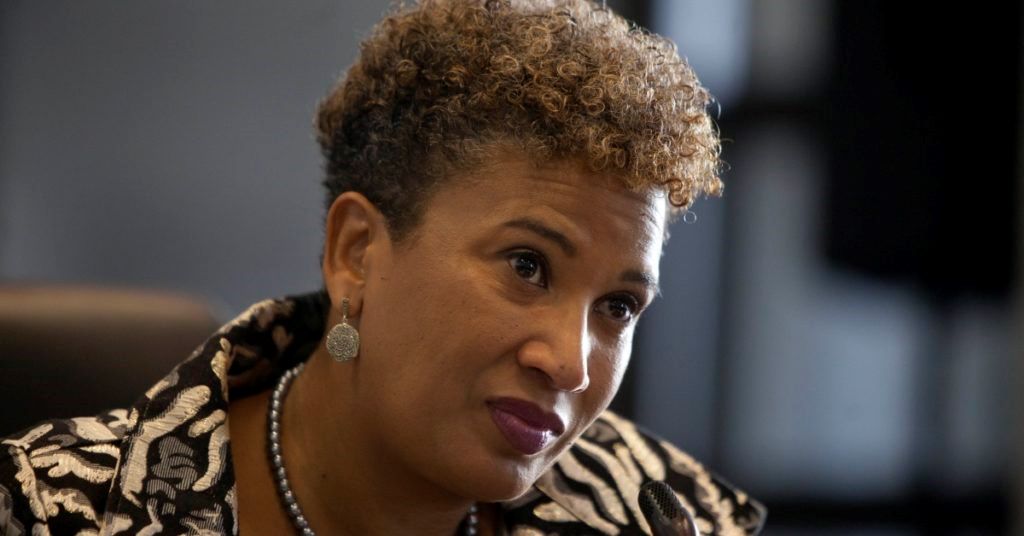
Justice Leona Theron, chairperson of the Mzansi National Philharmonic Orchestra and a serving Constitutional Court judge
Justice Leona Theron sits at one of the highest levels of South Africa's judicial system. She is a serving Constitutional Court judge.
She has also been the chairperson of the Mzansi National Philharmonic Orchestra, an organisation that has received R134.715 million in public funding since 2021.
Those two facts are not, by themselves, evidence of wrongdoing. But they raise a question that goes beyond the orchestra's finances.
What safeguards govern a serving Constitutional Court judge who simultaneously chairs an organisation receiving tens of millions of rands in public money and making discretionary grants to other organisations?
That is the question The Public Dispatch has been pursuing.
The inquiry follows our investigation into the Mzansi National Philharmonic Orchestra, which found that the organisation received substantial public funding through the National Arts Council while operating as a private non-profit company.
The NAC told The Public Dispatch that the initial R54.68 million allocation was ring-fenced by the Department of Sport, Arts and Culture and that the NAC had no role in deciding the beneficiary.
The investigation also found that MNPO subsequently distributed R20 million to regional and youth orchestras, including R3.2 million each to the KwaZulu-Natal Philharmonic Orchestra and Johannesburg Philharmonic Orchestra.
One recipient, the Cape Town Philharmonic Orchestra, rejected the proposed R2.5 million and questioned MNPO's authority to distribute taxpayers' money.
This was not merely an objection made in passing but the CPO communicated its concerns directly to MNPO Chairperson. That chairperson was Justice Leona Theron.
A judge at the head of a publicly funded organisation
MNPO's own current board information identifies Justice Theron as a Justice of the Constitutional Court.
The orchestra has also publicly identified her as its chairperson. In 2023, MNPO described its board as being led by Justice Leona Theron.
The position therefore places a serving member of South Africa's highest court in a senior governance role outside the judiciary.
Again, that fact alone does not establish a breach of judicial ethics. Judges are not prohibited from having all extra-judicial interests or activities.
But those activities are not entirely unrestricted either.
South Africa's judicial framework places particular emphasis on independence, impartiality and public confidence in the judiciary. The Judicial Service Commission's own material describes the Code of Judicial Conduct as providing the ethical and professional standards applicable to judges.
The regulations governing judges' registrable interests also specifically provide for disclosure of registrable interests. The regulations include interests connected to directorships and business enterprises or legal entities.
That makes the basic factual questions unavoidable:
- Was Justice Theron's MNPO directorship disclosed?
- When was it disclosed?
- Was the position considered under the rules governing judges' extra-judicial activities?
- Was any advice, consent or approval sought or obtained?
- And most importantly: Was the potential effect on public confidence in judicial independence considered?
The chair was not a spectator
The significance of Theron's role cannot be reduced to her name appearing on a list of directors. The CPO dispute demonstrates why.
The Public Dispatch previously reported that MNPO offered the Cape Town Philharmonic Orchestra R3.2 million in December 2022.
The CPO rejected the money, saying its board had "grave doubts about the legality of MNPO distributing taxpayers' money."
The CPO wrote:
" Dear Justice Theron. In this regard I must inform you that at its meeting on 5 December 2023 the Board of Cape Town Philharmonic Orchestra unanimously rejected the proposed allocation of ….an amount of R2.5 million for the current year to the CPO by the Mzansi Philharmonic."
"I would like to point out that the so-called grant was similarly rejected by the CPO Board last year. Yet, despite this very and unambiguous rejection, your Mr Tembe made various public statements that the CPO had in fact been granted the money , thereby implying that it had been accepted."
"In annual report of the Mzansi Philharmonic for 2022, an amount of 3 200 000 for the Cape Town Philharmonic Orchestra is included under the heading 'Grant Funding Breakdown' without any indication that this so called 'grant' has not been paid."
"Equally egregious and misleading is the fact that the AFS is questionable in that the CPO did not receive, in fact rejected, the proposed grant from Mzansi, yet it is recognised in the AFS of the so called 'Mzansi National Philharmonic Orchestra NPC ' for the 13 months ended 31 December 2022 which was issued on 24 February 203."
The orchestra subsequently received another offer of R2.5 million in 2023 and rejected that too.
The accounting subsequently became another point of contention. MNPO's 2022 audited financial statements recorded the full R20 million as grants to regional and youth orchestras, including the R3.2 million intended for the CPO, even though the money was never paid to the Cape orchestra.
In December 2023, the CPO wrote to Justice Theron and complained that auditors had been given information that was "misleading, or at best incomplete and questionable".
That correspondence matters because it put a governance dispute directly before the person chairing the board.
The question is therefore not merely whether Theron was a director.
It is: What did the chairperson do when an established orchestra formally challenged the legality and accounting treatment of an MNPO grant?
The R20 million decision
MNPO's onward distribution of public money is particularly important because it was not simply an internal artistic decision.
According to the organisation's records cited in our previous investigation, R20 million was distributed among regional and youth orchestras. Tembe told The Public Dispatch that he recused himself from funding decisions involving the three Tier 1 orchestras with which he had overlapping roles.
That response addressed the potential conflict involving Tembe. It did not answer the broader question of board-level oversight.
The issue was whether the board had a proper governance framework for deciding how millions in public money would be distributed. And that brings the chairperson into focus.
- Was Justice Theron present when the decision was considered?
- Did she participate?
- Was she required to recuse herself from anything?
- What documentation was placed before the board?
- What legal authority did the board rely upon?
- And when the CPO rejected the grant and questioned the legality of MNPO's role, what action did the board take?
These are governance questions, not allegations of misconduct.
What did the judge disclose?
The Public Dispatch has asked Theron directly whether her MNPO position was disclosed in the Register of Judges' Registrable Interests.
We also asked whether any approval, authorisation or advice was sought or obtained before she accepted or continued the position.
We asked whether she had considered the position against the ethical requirements applicable to serving judges, particularly the principles surrounding extra-judicial activities, independence and public confidence.
We also asked whether she participated in the December 2022 decision to distribute funds to third-party beneficiaries. And we asked specifically about the CPO correspondence.
Justice Theron has not responded to The Public Dispatch despite a follow-up reminder. The publication has therefore been unable to establish her position on these questions. The absence of a response is not evidence that she breached any ethical rule. But it leaves important questions unanswered.
The OCJ's response
The Public Dispatch also approached the Office of the Chief Justice. The OCJ responded that enquiries relating to MNPO should be directed to the organisation itself.
"Please may you forward all enquiries related to the MNPO, to that organisation. They will be able to provide clarity/a response on your questions below," wrote Lusanda Ntuli from OCJ.
The Public Dispatch subsequently clarified that some questions were not about MNPO's operations at all, but concerned the judicial office, disclosure requirements and the ethical framework governing a serving Constitutional Court judge's extra-judicial activities.
The OCJ was asked whether Justice Theron's position had been disclosed, whether any approval or advice had been sought and whether the position had been considered under the applicable judicial ethics framework. At the time of publication, those questions remained unanswered.
Why the distinction matters
There is an important difference between a judge doing something unlawful and a judge occupying a position that creates legitimate questions about judicial ethics or public confidence.
The latter does not require proof of corruption or personal financial benefit.
South Africa's judicial framework is built around the independence and impartiality of the judiciary, with the Code of Judicial Conduct forming part of the ethical framework applicable to judges.
The regulations governing registrable interests likewise recognise that transparency about judges' outside interests is an important safeguard.
That is why the central question here is not whether Theron personally benefited from MNPO's public funding. The question is whether the nature of her role required particular safeguards to protect the appearance and reality of judicial independence.
The board's calibre
There is another reason this deserves scrutiny. MNPO's board has not been presented as an ordinary collection of passive directors.
The organisation's own material describes its directors as highly accomplished figures, including Theron, experienced business leader Wendy Luhabe and financial-services executive Magdalena Wierzycka.
That makes the question of governance more significant. These are people whose professional backgrounds include law, corporate governance, business and public accountability.
The public is therefore entitled to ask:
- What governance safeguards did such a board put around R20 million in discretionary grants?
- What did it do when one recipient challenged the legality of those grants?
- What oversight did it exercise over the organisation's financial reporting?
- And in Theron's particular case: how was her position as a serving Constitutional Court judge reconciled with those responsibilities?
The unanswered question
The MNPO has received R134.715 million in public funding.
It has distributed millions to other orchestras. One of those orchestras challenged the legality of that distribution and communicated its concerns to MNPO's chairperson.
That chairperson is a serving Constitutional Court judge. The Public Dispatch has now sought answers from the judge and the judicial authorities about the governance and ethical implications of that arrangement.
The answers have not come. And that leaves the central question hanging:
When the person entrusted with upholding the highest standards of judicial independence is simultaneously chairing an organisation entrusted with millions of rands in public money, who scrutinises the arrangement and what safeguards are put in place to ensure that public confidence in the judiciary is not compromised?
The Public Dispatch will continue to seek answers.