The R134.7 million question: How one man came to oversee, approve and benefit from public arts funding
Documents show Bongani Tembe sat at the centre of a R134.715 million public arts funding structure.
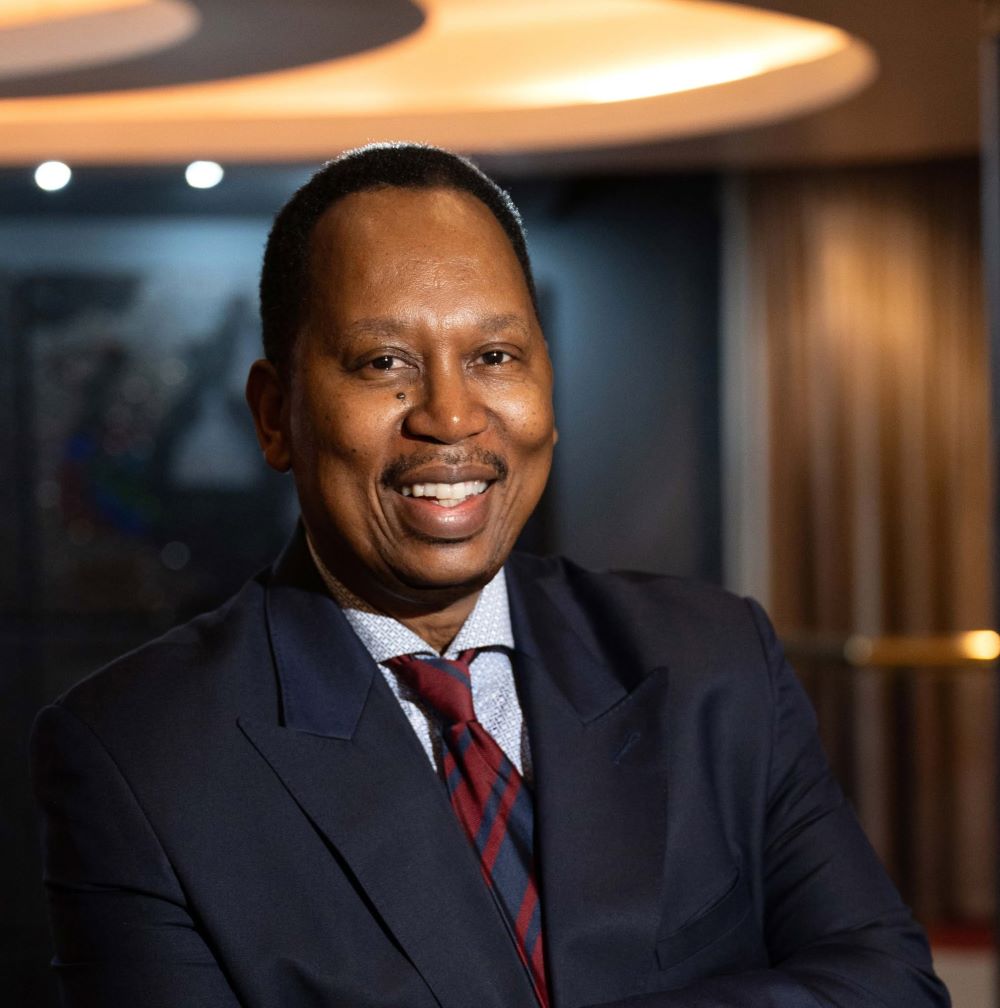
Official records place Bongani Tembe at every critical point of a R134.715 million public funding arrangement that has raised serious questions about governance, oversight and conflicts of interest. (Image: Facebook)
One man, Bongani Tembe sat on the council that processed millions of rands in public funding. He is the Chief Executive Officer of Mzansi National Philharmonic Ochestra (MNPO), a private company that received the money. He is also heading KwaZulu Natal Philharmonic Orchestra and Johannesburg Philharmonic Orchestra that later received grants from MNPO.
Since 2021, R134.715 million has flowed to MNP0 and no state auditor examines how it spends the money
The official records reveal how it happened.
The arrangement raises disturbing questions. The company's own administrator, National Arts Council (NAC) says it had no authority to question how the funds were used. Instead, the money was largely spent at the discretion of Tembe.
At the same time, Tembe sat on the Concil of the agency that processed the funding.
The result is a system where Tembe was or is still involved in approving, overseeing and distributing millions in public funds.
This is not an allegation from a rival but it is in the official records.
- The evidence comes from the NAC's own written answers to this publication.
- It is backed by the Auditor-General's correspondence with Parliament.
- It is supported by the signed funding agreement,
- the company's audited financial statements,
- and records from the public companies register.
Taken together, the documents tell a deeply troubling story.
MNPO was launched in July 2022 as South Africa's first national orchestra of the democratic era.Tembe is registered with the CIPC as Bongani John Mtembu.
At the same time, he sat on the governing council of the NAC. That is the same public body that processed millions of rands in funding for his company, MNPO. The overlap raises obvious questions about governance, oversight and conflicts of interest.
Determined by the Funder
The Public Dispatch put detailed questions to the NAC three weeks ago, the council's response was striking. It confirmed that MNPO's funding was "ring-fenced" by the Department of Sport, Arts and Culture.
The NAC said it had no say over who received the money.
"The NAC does not have jurisdiction and/or influence in selecting the beneficiaries of 'Ring-Fenced' funding as that is determined by the Funder," the council said.
The council also confirmed that the orchestra's initial R54.68 million allocation was made up of unspent funding carried over from the 2019/20, 2020/21 and 2021/22 financial years.
According to the NAC, those funds were allocated "as per the directive of DSAC." The admission is significant. It means the council says it merely processed the funding. The decision on who received it had already been made elsewhere.
The council also revealed, for the first time, the full amount of public money that has gone to the orchestra.
The orchestra received R21.583 million in 2021. It received the same amount again in 2022 and 2023. By 2026, the annual allocation had increased to R23.956 million. In total, the transfers add up to R134.715 million** in public funding.
Until now, the full scale of those payments had not been publicly disclosed.
The NAC's admission shifts the spotlight to DSAC. According to the council, it did not decide who should receive the initial R54.68 million. Instead, it says the Department directed that the money be transferred to the MNPO.
The funding came from three years of accumulated ring-fenced orchestral funds. Those funds built up after the Department ended ring-fenced funding for regional orchestras in November 2018, citing "financial constraints."
Yet the money was later directed to a company that had been incorporated only weeks before the funding agreement was signed.
The Public Dispatch sent detailed questions to the Department of Sport, Arts and Culture on 15 July. They included a request for a copy of the directive authorising the transfer. By the time of publication, the Department had not responded.
A contract that predates the company
The Public Dispatch has obtained the signed funding agreement between the NAC and the MNPO.
It is dated 10 November 2021. It was signed for the NAC by then interim chief executive Marion Mbina-Mthembu. It was signed for the orchestra by Tembe, described as the "Programme Convenor". But the agreement says it "will commence on 1 April 2021."
That is almost five months before the company even existed. Records from the CIPC, backed by the company's own audited financial statements, show the orchestra was only incorporated on 28 September 2021.
The anomalies do not end there.
According to the agreement, the Department appointed the MNPO's board in December 2019 for a five-year term, almost two years before there was even a registered company for the board to govern.
On the agreement's own terms, that board's five-year mandate expired in December 2024. Neither the Department nor the orchestra has explained under what authority the current board continues to serve.
The documents raise further questions. Annexure B is titled "Annual MNPO Business Plan." Yet it contains no business plan. Instead, it consists of a single paragraph stating that the Department had already approved and signed a plan that had been submitted to the NAC.
Annexure C is described as the orchestra's Annual Risk Register. For a public funding commitment of R54.68 million, it identifies just two risks. When The Public Dispatch asked whether the NAC had received a business plan before approving the funding, the council answered "Yes."
When asked whether it would release that plan, or a revised version submitted in 2023, the answer was "No." The council gave no reason for refusing.
Two different answers for R2,734,030.
According to the agreement the NAC is also allowed to keep a 5% administration fee worth R2,734,030. The contract says the money was meant to support the orchestra's establishment and to monitor, report on and evaluate its performance. But when asked what work the fee actually paid for, the NAC gave a different explanation.
It said the money was used to "support and augment the administrative costs/expenses of the NAC." Asked what its monitoring had uncovered about how the orchestra distributed public funds, the council did not describe any oversight findings. Instead, it referred The Public Dispatch to the orchestra's own annual reports.
Tembe and confilct of interest?
On its face, Tembe's position is exactly the kind of situation conflict-of-interest rules are meant to prevent. The NAC agrees that its own policy bars council members and organisations linked to them from receiving NAC funding. But the council says this case was different.
It argues the policy did not apply because the money was "ring-fenced" by the DSAC.
"The conflict-of-interest principle does not arise in circumstances where the NAC is not involved in deciding the recipients," the council said.
It compared the arrangement to processing the Department's Covid-19 relief payments. The Public Dispatch asked whether Tembe declared his interest and recused himself from any council discussions. The NAC did not answer that question directly. Instead, it said the council "did not adjudicate" the funding. It also failed to provide the council minutes.
The council's position has far-reaching implications.
It means the very rule designed to stop council members and their organisations from receiving NAC funding did not apply to the largest arts allocation of the period simply because the money was routed through a different process.
In December 2022, the Mzansi orchestra distributed R20 million to several beneficiaries. The KwaZulu-Natal Philharmonic Orchestra received R3.2 million. The Johannesburg Philharmonic Orchestra also received R3.2 million.
Responding to The Public Dispatch, Tembe said he manages the conflict at the grant-making stage.
He said he sits on the orchestra's Artistic Planning Committee but recuses himself whenever funding decisions involve the three Tier 1 orchestras, Johannesburg, Cape Town and Durban.
According to Tembe, that recusal is recorded in the signed funding schedule.
But even if that recusal is confirmed, it answers only one part of the question. It relates to the decision to award the funding. It does not address the question of governance.
The underlying structure remains unchanged. At the time, Tembe simultaneously led MNPO, the organisation awarding the grants and two of the orchestras receiving them. The NAC has also confirmed that its funding agreement did not authorise the orchestra to distribute money to other orchestras.
"The MOA does not cover the general activities of the MNPO," the council said.
Instead, it said those grants flowed from the orchestra's own strategic plan.
That raises another question, if the onward distribution of millions of rand was not governed by the funding agreement, what public oversight governed it instead?
The grant that was refused but recorded anyway
One orchestra refused the money. The Cape Town Philharmonic Orchestra (CPO) was awarded R3.2 million in December 2022. It was given about a week to accept. The board said no.
In a letter to the MNPO's the CPO board wrote:
"...the CPO board is unable to accept the proposed grant. The Board has grave doubts about the legality of MNPO distributing taxpayers' money."
When another offer of R2.5 million followed in late 2023, the board rejected that too. Part of the letter reads:
"...the so called 'grant' was rejected by CPO Board last year,"
But the accounting tells a different story. The Mzansi orchestra's audited financial statements for the 13 months ending 31 December 2022 recorded the full R20 million as "grants to regional and youth orchestras."
That total included the R3.2 million intended for the CPO. The money was never paid.
The financial statements were signed on 24 February 2023 by the chairperson and chief executive Bongani John Mtembu. Tembe says the accounting was correct. He told The Public Dispatch that the R20 million reflected money approved by the board, not necessarily money already paid.
According to him, grants that had been approved but not yet paid were carried as accrued expenses. He also said the CPO had not formally rejected the grant by 31 December 2022. Once it later declined, he said, the money was returned to the funding pool and allocated elsewhere.
That explains the position at the end of 2022. It does not answer what happened afterwards. A year later, after the refusal was beyond dispute, the same R3.2 million still appeared in the orchestra's 2022 annual report and audited financial statements without any explanation that the grant had never been paid.
That prompted a sharp response from the CPO, writing to the orchestra's chairperson on 7 December 2023, the CPO wrote:"It is patently clear that the Auditors were provided with and acted on misleading, or at best incomplete and questionable information..."
The financial statements contain another unanswered question. The directors' report says that after the directors had signed the statements, the auditors discovered an error. It says the error would be corrected in the following financial year. It does not explain what the error was. It does not say how much money was involved.
The statements were audited by Burns Acutt Audit Services Incorporated, a firm registered in 2021.
The figures also raise questions that remain unanswered. The accounts record R20 million in grants and R9.6 million in concert costs. Yet the notes also show R16.28 million in payables and R13.89 million in cash at year-end. The orchestra has not yet explained how those figures reconcile.
The audited financial statements were more than an accounting exercise. Under the funding agreement, they unlocked the NAC's final payment of R10,389,314. The NAC confirmed it received the orchestra's financial statements every year.
It also said it had "no findings on the funding of the MNPO." That statement sits uneasily alongside the Auditor-General's own record. In February 2023, the Auditor-General informed Parliament's Portfolio Committee that the audit had identified possible irregular expenditure linked to the transfer of funds to the orchestra.
The Auditor-General said it could not reach a final conclusion because key processes had been handled by the Department of Sport, Arts and Culture.
It also told Parliament that the NAC had disclosed the transfer as irregular expenditure under investigation.
Asked about the matter three week ago, the Auditor-General said it followed up the issue during the 2022/23 audit. It ultimately found no material matters that required reporting in its regulatory audit.
The Auditor-General said that it only audits the NAC not the private companies, "The MNPO... is not a public entity," said the Auditor General.
In other words, once the money crossed from the NAC to MNPO it left the Auditor-General's jurisdiction entirely.
There never was a task team
The origins of the Mzansi National Philharmonic Orchestra remain disputed. In 2019, DSAC drafted formal terms of reference for an independent feasibility study. The work was supposed to be carried out by "a credible research entity."
No evidence has emerged that the tender was ever advertised or awarded.
Instead, the Department later told Parliament that it had appointed a task team of industry experts to advise on the project. It also said the sector had been consulted. Among the people it identified was Louis Heyneman, then chief executive of the Cape Town Philharmonic Orchestra.
But Heyneman tells a very different story.
Speaking to The Public Dispatch in his personal capacity after retiring in December 2025, he said there was no functioning task team. His account is backed by a sworn affidavit submitted in 2023 to the Western Cape MEC, Parliament's Portfolio Committee and the Department.
In the affidavit, Heyneman says he attended a single information meeting in March 2019. After that, he says he was never invited to another meeting. He says he repeatedly asked for minutes but never received them. He says nothing more happened for the next three years. "There never was a task team," Heyneman wrote to Bongani Tembe in September 2022.
The letter forms part of the affidavit obtained by The Public Dispatch. He added:
"Anyone who pretends that proper consultation took place is disingenuous."
Emails seen by The Public Dispatch raise further questions. In May 2019, four people identified as members of the proposed task team exchanged emails saying they had been "reliably informed" that Tembe had been paid R1 million as director of the national orchestra project.
They said they had worked without pay. They also said they had never been shown the report submitted in the task team's name. The group wrote to the Minister raising those concerns. They say they never received a response.
The Public Dispatch asked the Department to confirm or deny whether the payment had been made. It also requested the procurement records. By the time of publication, the Department had not responded
.Heyneman remains deeply critical of the project.
"I wasn't able to influence the politicians,"he told The Public Dispatch.
He described the orchestra as "an expensive PR endeavour." He said the money "should have been used for training young musicians."
Giving one person with multiple roles
"the power to be the final decision maker and gatekeeper of the Department's full orchestra budget, is simply not democratic."
The orchestra's own 2023–2025 business plan also raises questions about value for money. The document, seen by The Public Dispatch, set annual targets of between three and five concerts a year. During the same period, the orchestra was receiving more than R20 million in public funding each year. The plan also included a cadet programme, university grants and international performances.
This is the first article in The Public Dispatch's investigation into the public funding of the Mzansi National Philharmonic Orchestra. The series examines how millions of rands in taxpayers' money were allocated, governed and accounted for—and the questions that remain unanswered.