Why rural South Africa is the Nation’s new engine of growth
Rural South Africa holds the key to the country's next economic breakthrough, says Deputy Minister Gina
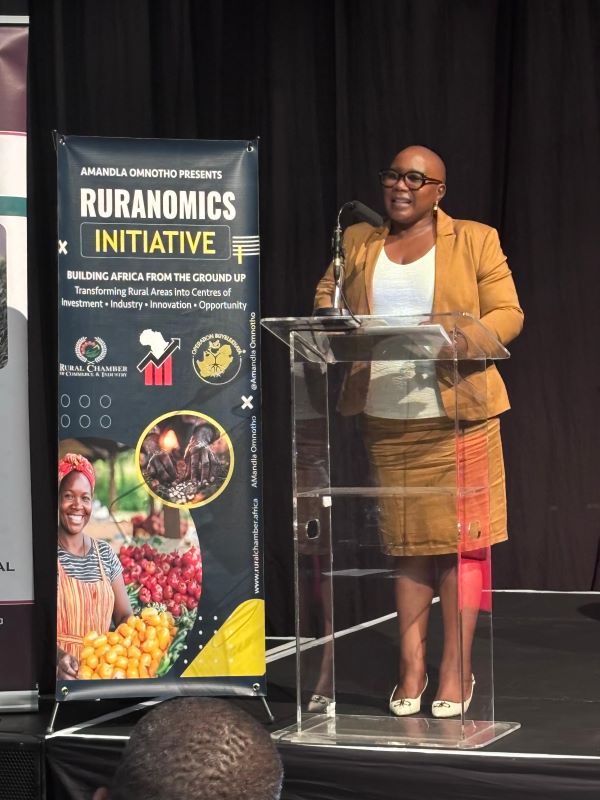
Deputy Minister Dr Nomalungelo Gina delivers the keynote address at the Amandla Omnotho Grand Economic Conference, championing innovation-led growth in South Africa's rural economy. (Image: DSTI)
For too long, the narrative surrounding rural South Africa has been framed by challenges but today, that narrative is being rewritten with a bold, new vision: Rural South Africa is not a margin to be managed, but an untapped reservoir of economic wealth waiting to be unleashed
Deputy Minister of Science, Technology and Innovation Dr Nomalungelo Gina has called for a fundamental shift in how rural communities are viewed, she described them not as centres of poverty but as untapped engines of innovation, entrepreneurship and economic growth.
Speaking at the recently concluded 10th Amandla Omnotho Grand Economic Conference, she said the country's next wave of economic development would not be driven solely by major cities and industrial hubs, but also by villages, farming communities, mining towns and coastal settlements that possess enormous productive potential.
The two-day conference, held under the theme "RURANOMICS :Unlocking Rural Economic Power for Inclusive Growth," brought together government leaders, entrepreneurs, agricultural experts, innovators and development practitioners to explore practical solutions for unlocking rural economies through science, technology and innovation.
"Rural South Africa does not need to be saved. It needs to be connected to capital, markets, technology and the policy courage that matches its people's ambition," Gina told delegates.
Her message reflected a growing recognition that rural communities already possess many of the assets required to stimulate sustainable economic growth. These include fertile agricultural land, livestock, mineral resources, biodiversity, indigenous knowledge, tourism attractions and a resilient entrepreneurial spirit.
Rather than viewing these communities through the lens of dependency, Dr Gina said policymakers must recognise their capacity to generate employment, build competitive enterprises and contribute meaningfully to national economic growth.
She highlighted several initiatives undertaken by the Department of Science, Technology and Innovation (DSTI) that are already making a tangible impact in rural communities.
Through the Department's Agriculture Bio-economy Innovation Partnership Programme, support has been provided for the development of new technologies and products aimed at strengthening small businesses and agricultural enterprises.
During the past financial year alone, the programme supported seven technology prototypes, 28 product developments, four agro-processing demonstrations and one digital agriculture application, with 16 small, medium and micro enterprises benefiting directly.
One of the programme's notable achievements has been the rollout of ten fully equipped mobile kitchen carts to women entrepreneurs in Limpopo, Mpumalanga and North West. Developed through the Promoting Agro-processing in Low-income Communities project, the mobile units are helping small-scale food businesses improve production standards while expanding their access to new markets.
The conference also explored how emerging technologies such as artificial intelligence, digitalisation, bio-energy solutions and intra-African trade can accelerate rural development and create new opportunities for farmers, cooperatives and community-based enterprises.
Amandla Omnotho founder Xaba urged South Africans to embrace what he termed Operation Buyelekhaya, encouraging citizens to return to their communities and invest their skills, knowledge and resources in building local economies.
He said developing an entrepreneurial culture within rural communities would create lasting economic opportunities while inspiring future generations to innovate and become job creators rather than job seekers.
Meanwhile, Dumisani Nhlengthwa, Agribusiness Development Facilitator at eThekwini Municipality, emphasised the importance of strengthening local value chains by ensuring that rural communities produce what local markets consume.
He argued that aligning production with local demand would improve competitiveness while reducing dependence on imported goods.
The conference concluded on Friday with awards recognising excellence in rural economic development, innovation and the sustainable use of local assets.
For the Department of Science, Technology and Innovation, the discussions reinforced a growing belief that science and innovation must become accessible to every community, regardless of geography.
"The future of South Africa's economic growth will be built wherever innovation meets opportunity, wherever talent meets investment, and wherever communities are empowered to create value from their own resources," Gina said.
Her remarks underscore an emerging vision for rural development—one in which innovation serves as the bridge between local potential and national prosperity, positioning rural South Africa as a powerful contributor to the country's long-term economic future.