Accountability or red tape? President Ramaphosa moves to publish Minister Performance deals: But there’s a catch.
President Ramaphosa confirms Ministerial Performance Agreements will be published online. He also clarified that Parliament, not the public, will oversee failures.
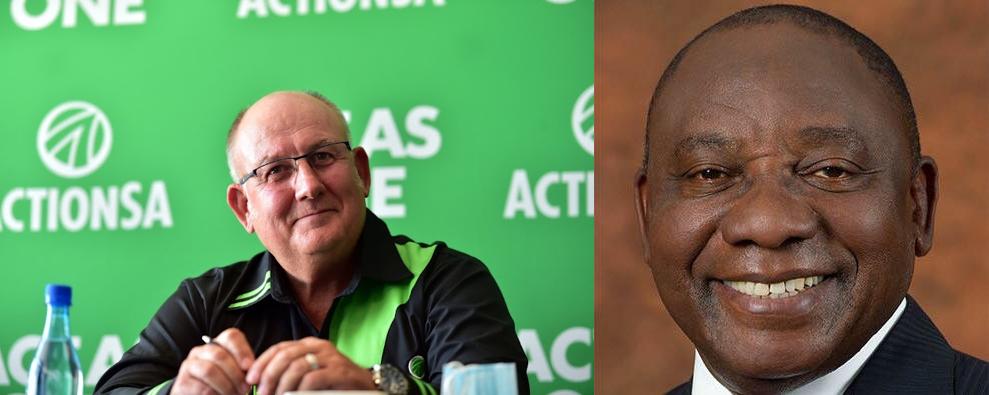
President Cyril Ramaphosa and ActionSA Chief Whip Athol Trollip at the centre of growing calls for transparency on ministerial performance agreements. (Image from facebook)
Parliament is in charge of holding Ministers accountable for their performance.
In South Africa’s constitutional setup, the rules are clear, Cabinet members are accountable to Parliament, it’s a key principle of our democracy. But it often feels like a closed-door conversation.
According to the Presidency, the primary watchdog for Ministers is Parliament through its committees and debates rather than the general public directly.
"Public oversight and accountability is exercised through the mechanisms established to give effect to the Constitutional stipulation that Members of the Cabinet are accountable collectively and individually to Parliament for the exercise of their powers and the performance of their functions."said Ramaphosa.
President Cyril Ramaphosa was responding to ActionSA Chief Whip Athol Trollip, who sought clarity on when the public will be granted access to the performance agreements signed by the country’s Ministers.
The MTDP: A five year roadmap for delivery
The President confirmed that individual performance agreements have been signed with every Minister. These are not just HR documents but they are designed to align with the Medium-Term Development Plan (MTDP), the government’s master strategy for the next five years.
"I have signed performance agreements with each Minister as one of the mechanisms for ensuring that Ministers undertake the tasks assigned to them by the President in line with the Medium Term Development Plan." said Ramaphosa.
The goals are ambitious, covering the big issues that keep South Africans up at night, job creation, economic growth, and the fix for crumbling basic services like water, electricity, and health care.
Ramaphosa maintains that these agreements are a vital tool to ensure Ministers actually do the work they were appointed to do.
Publication promised but date unknown
In a move welcomed by transparency advocates, the President confirmed that the signed agreements are being prepared for publication on the government’s official website. A public announcement will follow once the remaining technicalities are resolved.
"The signed performance agreements are being prepared for publication on government’s website. A public statement will be made once all the agreements are available online," Ramaphosa said.
At face value, this appears encouraging. Once published, citizens and civil society groups could, in theory, monitor whether Ministers are meeting their targets. However, the President stopped short of providing a firm deadline. Without a date, 'underway' can feel a lot like indefinite to a public tired of waiting for results.
The silent treatment on failures and consequences
One of the sharpest questions from Trollip was whether any Ministers have already failed their targets and if so, what happens next?
The President’s response was notably vague. He skipped a direct "yes" or "no" instead repeated that progress is "assessed periodically" and "corrective action" is taken inside the Executive.
"Progress in the implementation of these agreements is assessed periodically and corrective action taken when necessary," Ramaphosa replied.
For South Africans dealing with daily service delivery collapses, from dry taps to social grant delays, this lack of detail is frustrating. We know the failures are happening, we just don't know if anyone is being held accountable for them.
Oversight or out of sight?
When pushed on whether he would commit to a regular, public schedule for these reports (like a quarterly scorecard), the President pivoted back to the Constitution. He restated that public oversight is the job of Parliament.
Why the full picture matters
Performance agreements are only as powerful as the pressure behind them. When targets are public, the incentive to deliver skyrockets. Citizens and voters gain the facts they need to demand better.
The President’s willingness to move these documents online is a step in the right direction. But until we have firm dates and clear consequences for failure, the gap between Parliamentary oversight and Real-world accountability remains wide. True trust is not built on promises of publication, it’s built on the results we can finally see for ourselves.