"Time to put ASA under administration" : Parliament loses patience as global monitoring looms
From legal death in the CIPC to international monitoring by World Athletics: Parliament is ready to pull the plug on ASA this Friday.
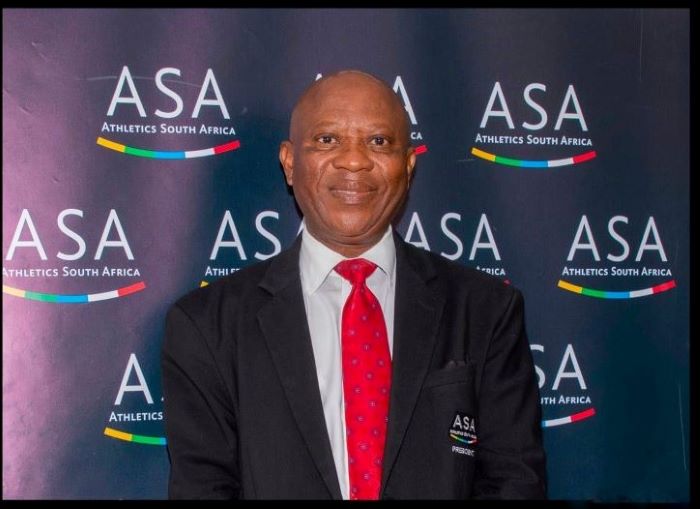
UNDER THE MICROSCOPE: ASA President James Moloi faces a final Friday reckoning as Parliament moves toward the Administration option.
South Africa’s athletics governance crisis has reached a critical tipping point, with mounting pressure from both Parliament and international bodies now converging on Athletics South Africa (ASA).
In a blistering session of the Portfolio Committee on Sport, Arts, and Culture on Tuesday, lawmakers signaled that the era of repeated warnings is over, calling for the national federation to be placed under formal administration.
The catalyst for this drastic shift was the confirmation that World Athletics has placed ASA under international monitoring, a move that MPs describe as a national embarrassment.
"Oversight is not enough"
Leading the charge was ANC MP Matsholo Mmolotsane, who delivered a scathing assessment of the federation’s leadership under reinstated President James Moloi and Acting CEO Terrence Magogodela.
She emphasised that the confirmation of ASA’s monitoring did not come from local authorities but from international structures, underscoring a breakdown in domestic accountability.
"ASA came here last year regarding the issue of deregistration and when I went through the minutes I couldnt get a convincing answer for deregistration. On top of that we've called them again regarding the mismanagement of funds where the funds were used incorrently. Here we are today, the World Athletic is on ASA. We've been raising our voices that something must be done with ASA. We've been requesting the Minister to consider putting ASA under administration up until eveything is sorted. We even discussed the suspension of the President and SASCOC said the President is still suspended. But when you check the President was only suspended for only two months," said Mmolotsane.
"We have reached a point where oversight is no longer enough. It has been confirmed not by our own officials, but by international bodies that Athletics South Africa (ASA) is now under formal monitoring. World Athletics is essentially doing the job that this board was elected to do," she continued.
"The fact that we have 38 outstanding issues, including critical financial and governance reports that have been ignored despite repeated warnings, is a direct insult to this Parliament," she said.
Her remarks reflect growing frustration among MPs, who have repeatedly summoned ASA leadership to account for ongoing failures with little meaningful progress.
The risk of a global ban
Mmolotsane’s remarks highlighted a growing fear within Parliament, that South Africa’s continued administrative instability could lead to a total international suspension, mirroring the crises seen in Russia and Kenya.
She took direct aim at the revolving door of leadership that saw James Moloi reinstated in late 2025 despite ongoing clouds over the federation's conduct.
"We have seen leadership suspensions lifted only for the same patterns of maladministration to return," Mmolotsane continued.
"The persistence of this failure undermines the accountability of this House. I am calling for the Department (DSAC) to stop being a spectator. It is time for the Minister to consider putting ASA under administration. We need a complete leadership overhaul to protect our athletes and restore the dignity of our national flag before World Athletics takes the choice out of our hands," she said.
From deregistration to credit card scandal — How ASA’s crisis unfolded
The governance crisis engulfing ASA can be traced back to a fundamental administrative failure that effectively stripped the federation of its legal standing, laying the foundation for the turmoil that followed.
At the heart of the crisis is the fact that ASA failed to file annual returns and pay required company fees between 2021 and 2024. This basic lapse in compliance led to the federation being deregistered, meaning it lost its legal status.
Between February and March 2025, ASA technically had no legal personality, a period now widely described as its legal death. The implications of this were profound:
- Any contracts signed during this period were potentially invalid
- Athlete suspensions could be legally challenged
- Financial transactions may have been unauthorised
In effect, South Africa’s national athletics body was operating without legal standing, raising serious questions about governance and oversight at the highest level.
Parliament stepped in
ASA was only reinstated on 21 March 2025, but this came after it was hauled before Parliament to explain how a national federation could fail to meet basic administrative requirements for three consecutive years.
Lawmakers expressed shock and frustration, viewing the lapse as more than just an administrative oversight, but rather as evidence of deeper structural failures within the organisation. This moment marked the beginning of intensified parliamentary scrutiny into ASA’s operations.
The Tavern credit card scandal
Just months later, in June 2025, the crisis deepened when Parliament was presented with findings from a forensic investigation initiated by Sports Minister Gayton McKenzie and conducted by South African Sports Confederation and Olympic Committee (SASCOC).
The probe revealed that an ASA credit card had allegedly been used for personal expenses, including alcohol, clothing purchases from retailers such as Foschini, and fast food.
The revelations, which became known as the tavern credit card scandal, triggered widespread outrage and further eroded confidence in ASA leadership.
Suspension and return on a technicality
The fallout from the scandal led to the suspension of ASA president James Moloi in October 2025.
However, in a controversial twist, Moloi was reinstated on 22 December 2025, not because he had been cleared of wrongdoing, but due to a procedural flaw. His notice of misconduct had been signed by Terrence Magogodela, who was himself implicated in the same credit card investigation. A disciplinary process ruled this to be a conflict of interest, rendering the suspension invalid.
Moloi’s return to office was therefore widely viewed as a technical victory rather than a substantive exoneration, deepening concerns about accountability within ASA.
Friday: The final reckoning
Because of these escalating failures and the formal confirmation of international intervention, Parliament has summoned ASA to a mandatory meeting this Friday.
This session is expected to be the final cross-examination before the Committee officially recommends that Minister Gayton McKenzie invokes Section 13 of the National Sport and Recreation Act, the legal mechanism required to strip the current board of its power and appoint an administrator.
Chairperson Joe McGluwa echoed Mmolotsane’s frustration, noting that the continued disregard for binding committee solutions would no longer be tolerated.
Despite the gravity of these calls from the heart of South African democracy, ASA leadership has maintained a stony silence. Requests for comment regarding the Parliamentary motion and the World Athletics intervention have gone unanswered.
The Nuclear option of administration is no longer a threat, it is a live countdown that may reach zero this Friday.